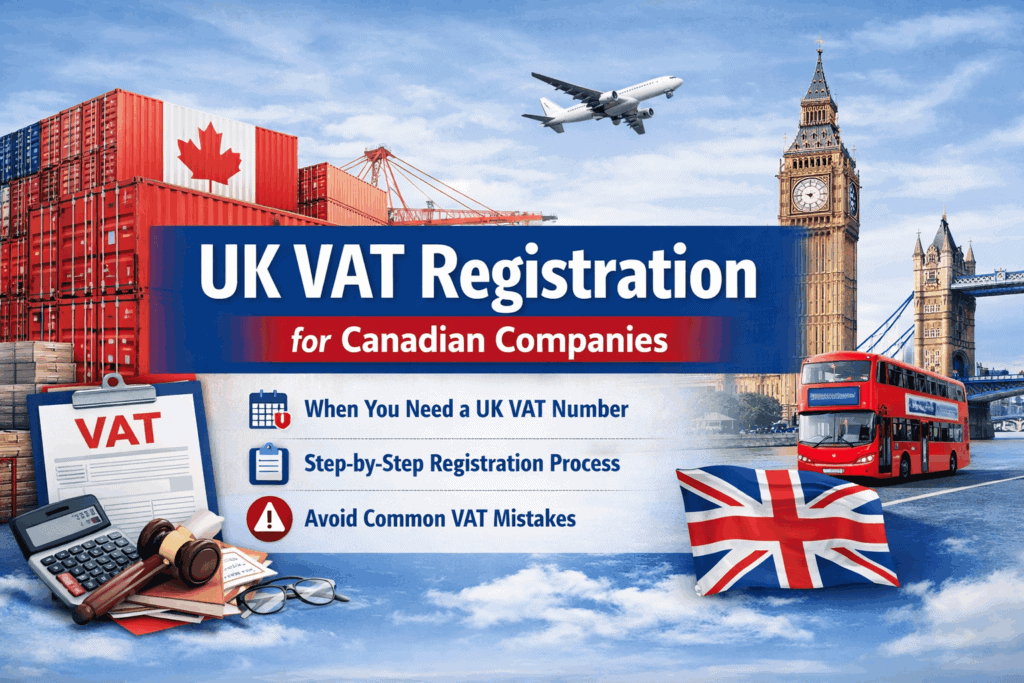
Trade between Canada and the United Kingdom has remained strong for decades, and many Canadian businesses see the UK as a natural next step when expanding internationally. The market is large, English-speaking, and well developed from a logistics perspective, which makes it particularly attractive for e-commerce brands, manufacturers, and technology companies.
In practice, we regularly see Canadian companies begin selling to UK customers through online stores, international distributors, or marketplaces such as Amazon. Others ship inventory into the country so products can be delivered faster to local buyers.
Sooner or later, the same question usually comes up: does the company need a UK VAT number?
Quite often, the issue only becomes visible when something operational happens. A shipment reaches a UK port and the freight forwarder asks for a VAT number. Amazon sends a compliance notification. Or a logistics provider explains that inventory cannot be stored in their warehouse without VAT registration.
From the perspective of many overseas businesses, this requirement can feel unexpected. Canadian companies are already familiar with GST/HST rules at home, but the UK VAT system works differently in several important ways.
Another point that often causes confusion is Brexit. A common assumption is that EU VAT rules still apply in the same way they once did. In reality, the UK now operates a fully separate VAT system, and overseas businesses frequently need to register earlier than they expect.
The purpose of this guide is to explain how UK VAT registration for Canadian companies works in practice — when it becomes necessary, how the process unfolds, and what international businesses should prepare before entering the UK market.
What Is UK VAT Registration for Canadian Companies
UK VAT registration is the process through which a business obtains a VAT number from HM Revenue & Customs (HMRC) and becomes part of the UK’s VAT reporting system.
Once registered, the company is required to:
- charge VAT on applicable UK sales
- submit VAT returns to HMRC
- maintain compliant accounting records
- follow UK invoicing rules
For Canadian companies, VAT registration normally becomes relevant when goods are physically involved in the UK supply chain.
Many business owners initially assume VAT applies only to UK companies or businesses established locally. In reality, VAT obligations are determined primarily by where the supply takes place and where goods are located, not where the company itself is incorporated.
For example, a Canadian company may remain fully based in Canada while still needing a UK VAT number if its goods are imported into the United Kingdom or stored in a UK warehouse.
A VAT number allows the company to operate properly within the UK market. It enables the business to charge VAT where required and, importantly, reclaim certain VAT costs such as import VAT.
Without VAT registration, international businesses often encounter practical barriers. Marketplaces may request a VAT number, logistics providers may require it before accepting inventory, and reclaiming import VAT becomes difficult or impossible.
When Businesses Need This
One of the most common surprises for Canadian businesses is how early VAT registration can become necessary.
UK companies benefit from a domestic VAT registration threshold. However, overseas businesses frequently fall outside that threshold once taxable activity takes place within the UK.
In practical terms, the obligation often arises when goods become part of the UK supply chain.
Typical triggers include:
- importing goods into the UK
- storing products inside UK warehouses
- selling goods already located in the UK
- acting as the importer of record
- using Amazon FBA or other UK fulfilment networks
In many real-world situations, VAT registration must be completed before meaningful sales even begin.
For example, a Canadian e-commerce brand may ship a container of products to the UK in order to store them locally and fulfil orders quickly. From HMRC’s perspective, those goods have already entered the UK supply chain. That alone can create a VAT obligation.
Many businesses only become aware of this requirement when a freight agent, marketplace, or fulfilment provider requests a VAT number.
Who Typically Needs It
Over the years we have assisted a wide range of overseas companies with UK VAT registration. Canadian businesses appear across many sectors, but several categories come up most frequently.
E-commerce brands
Canadian online retailers selling physical products to UK consumers through their own websites or international marketplaces.
Amazon sellers
Amazon’s UK fulfilment network allows sellers to store inventory locally and deliver products quickly. However, once inventory sits in a UK fulfilment centre, VAT registration is typically required.
Importers and distributors
Some Canadian companies import goods in bulk into the UK before distributing them to retailers or wholesalers.
Manufacturers supplying UK partners
Manufacturers shipping products to UK distributors may need VAT registration depending on the structure of the supply chain.
Certain digital services supplied to UK consumers can also create VAT obligations.
In practice, the largest group tends to be e-commerce sellers importing inventory into the UK. This model has become extremely common as global brands aim to reduce delivery times for UK customers.
Common Situations That Trigger This Requirement
Several business scenarios regularly lead to VAT registration for Canadian companies.
Importing goods into the UK
A typical situation arises when a Canadian company ships products directly into the UK and acts as the importer of record.
At the point of import, UK import VAT becomes payable. Without a VAT registration, reclaiming that VAT becomes difficult and operational processes can become complicated.
Storing goods in UK warehouses
Once inventory is physically located inside the UK, sales of those goods are generally treated as UK domestic supplies.
This is one of the most common reasons overseas companies need VAT registration.
Using Amazon UK FBA
Amazon’s fulfilment system allows international sellers to store products in its UK logistics centres.
Many Canadian sellers discover the VAT requirement only after Amazon requests a VAT number as part of its compliance checks.
Selling goods already located in the UK
If goods are stored in a UK warehouse — whether operated by Amazon or a third-party logistics provider — sales to UK customers are considered domestic transactions.
Domestic sales normally require VAT registration.
Acting as importer of record
When the Canadian company takes legal responsibility for importing goods into the UK, HMRC usually expects VAT registration to follow.
Step-by-Step Process
Although the process is relatively straightforward, UK VAT registration for overseas companies requires careful preparation.
Applications can be delayed if documentation is incomplete or if the business model is not clearly explained.
Step 1 — Assess VAT registration obligation
The first step is determining whether VAT registration is actually required.
This involves reviewing the company’s supply chain in detail:
- where goods are manufactured
- how products enter the UK
- who acts as importer of record
- where inventory will be stored
- who the end customers are
A proper review helps ensure the registration is structured correctly.
Step 2 — Prepare the VAT registration application
Once the obligation is confirmed, the application is submitted to HMRC.
This stage includes preparing information about the company’s activities, expected sales volumes, and logistics arrangements.
HMRC typically wants to understand:
- the nature of the business
- how goods move through the supply chain
- how the company will operate within the UK market
Supporting documents must also be included.
Step 3 — VAT number issuance and compliance setup
After reviewing the application, HMRC issues a UK VAT number.
From that point onward, the company becomes responsible for ongoing VAT compliance.
This usually includes:
- charging VAT where applicable
- submitting periodic VAT returns
- keeping VAT records and invoices
- complying with UK accounting rules
For many international businesses, the ongoing compliance aspect becomes the more important operational responsibility after registration.
Documents Required
HMRC requires supporting documentation when reviewing VAT applications from overseas companies.
Canadian businesses usually need to provide:
- certificate of incorporation
- company registration records
- proof of business activity
- director identification documents
- explanation of the supply chain
- contracts with warehouses or logistics providers
- shipping or import documentation
Additional documents may be requested depending on the nature of the business.
If the supply chain involves multiple jurisdictions or complex logistics arrangements, HMRC may request further clarification before approving the registration.
Providing clear documentation from the beginning usually helps avoid delays.
Common Mistakes Businesses Make
Many Canadian companies approach the UK market without fully understanding how VAT obligations arise. Certain mistakes appear repeatedly.
Assuming EU VAT rules still apply
Before Brexit, EU VAT systems were integrated. Some businesses still assume that EU VAT rules automatically cover UK transactions.
The UK now operates a separate VAT regime.
Delaying VAT registration
Companies sometimes ship goods into the UK first and deal with VAT later. This can create compliance complications once HMRC reviews the situation.
Misunderstanding the importer of record role
Businesses occasionally structure shipments incorrectly and later discover they have created unexpected VAT responsibilities.
Marketplace compliance issues
Platforms such as Amazon monitor VAT compliance closely. If a seller cannot provide a valid VAT number when required, selling privileges may be restricted.
Poor VAT record management
After registration, businesses must maintain accurate records and file VAT returns on time.
Risks and Penalties
Operating in the UK market without proper VAT registration can expose businesses to several risks.
HMRC may impose:
- backdated VAT assessments
- financial penalties
- interest on unpaid VAT
- compliance investigations
Another issue appears when companies attempt to reclaim import VAT without being properly registered.
Without a valid VAT number, recovering import VAT through the normal VAT return process is generally not possible.
For businesses importing significant volumes of goods, unrecoverable VAT can quickly become a substantial cost.
In addition, marketplaces may suspend accounts if sellers fail to demonstrate VAT compliance.
How Professional VAT Assistance Helps
For many Canadian companies, the UK VAT system is unfamiliar territory. While the rules are manageable, misunderstandings about the supply chain can easily lead to problems.
Professional VAT assistance can help clarify the situation before the business begins trading.
Specialists typically assist with:
- confirming whether VAT registration is required
- reviewing the supply chain structure
- preparing the VAT registration application
- communicating with HMRC
- managing VAT returns and ongoing compliance
In practice, addressing VAT obligations early helps businesses avoid disruption once operations begin.
For companies planning to store inventory in UK warehouses or use Amazon FBA, obtaining VAT registration in advance often prevents delays and compliance problems.
FAQ
Do Canadian companies need a UK VAT number to sell on Amazon UK?
If inventory is stored in Amazon’s UK fulfilment centres, VAT registration is usually required. Amazon may request a VAT number once goods are held within its UK logistics network.
Is there a VAT registration threshold for overseas businesses?
In many situations, overseas companies do not benefit from the same VAT threshold that UK-established businesses receive when goods are imported or stored within the UK.
How long does UK VAT registration take?
Processing times vary depending on HMRC’s workload and the completeness of the application. For overseas companies, the process often takes several weeks.
Can Canadian companies reclaim import VAT?
Yes. Once VAT registered, businesses can normally recover import VAT through their VAT returns if the goods are used for taxable business activity.
Do I need to open a UK company to obtain a VAT number?
No. Canadian businesses can register directly for UK VAT without establishing a UK company.
How often must VAT returns be submitted?
Most businesses file VAT returns quarterly, although alternative reporting arrangements may apply in certain situations.
If your Canadian company plans to import goods into the United Kingdom, store inventory locally, or sell through marketplaces such as Amazon, understanding the VAT implications early can save considerable time and cost.
Professional VAT support helps ensure the registration process is handled correctly and that your business remains compliant as it grows within the UK market.