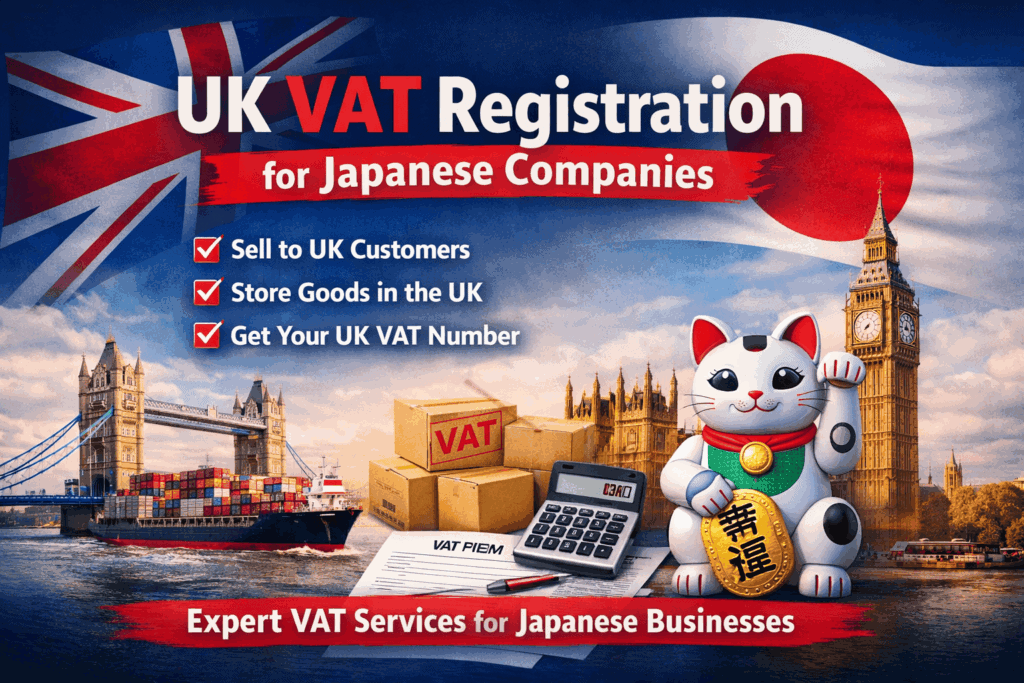
Over the past decade, more and more businesses in Japan have started selling directly to customers in the United Kingdom. For many companies, the UK is one of the most attractive overseas markets: it has a large ecommerce sector, high purchasing power, and strong demand for imported products.
Japanese brands are particularly well positioned in this environment. Products from Japan are often associated with quality, precision manufacturing, and distinctive design. As a result, UK consumers actively seek out Japanese goods — whether that is electronics, cosmetics, collectible merchandise, or specialist tools.
However, selling to the UK also means dealing with the country’s tax system. One of the first regulatory issues international sellers encounter is UK VAT registration for Japanese companies.
Many business owners are surprised to discover that VAT obligations can arise even if their company has no office, staff, or physical presence in the UK. What matters is not where the business is located, but how goods or services are supplied to customers in Britain.
If your company in Japan sells products to UK customers through ecommerce platforms, imports goods into the UK, or stores inventory locally, there is a strong chance that UK VAT rules apply.
In this guide, I’ll explain when companies from Japan must register for VAT in the UK, how the process works in practice, and what ongoing responsibilities businesses should expect once they receive a UK VAT number.
Do Companies from Japan Need UK VAT Registration?
In many cases, the answer is yes.
UK VAT rules apply not only to domestic companies but also to foreign businesses that supply goods or services within the UK market. This means that a company registered in Japan can still become liable for UK VAT depending on how it operates.
Unlike UK-based companies, overseas businesses often do not benefit from the normal VAT registration threshold. This means that VAT registration may be required from the first taxable sale if certain conditions are met.
Some of the most common triggers for UK VAT registration for foreign companies include:
- importing goods into the UK
- storing products in UK warehouses
- selling goods that are already located in the UK
- using fulfilment services such as Amazon FBA
- selling directly to UK consumers through ecommerce platforms
For many businesses, the obligation to register VAT UK from Japan appears once the company begins scaling its UK sales operations or storing inventory inside the country.
Even businesses that initially ship goods directly from Japan sometimes reach a point where UK VAT registration becomes necessary as sales grow.
Common Scenarios When Businesses from Japan Must Register for UK VAT
In practice, there are several situations where UK VAT registration becomes mandatory for Japanese businesses.
Understanding these scenarios helps companies avoid compliance issues and plan their expansion into the UK market more effectively.
Storing Goods in UK Warehouses
If a Japanese company stores inventory in the UK — whether in its own facility or through a third-party logistics provider — the goods are considered to be located in the UK at the moment they are sold.
From a VAT perspective, this means the company is making domestic UK supplies, which generally requires VAT registration.
This situation is common when businesses want to reduce shipping times for British customers.
For example:
A company in Osaka selling high-end Japanese kitchen knives may decide to hold inventory in a UK warehouse to ensure fast delivery across the country. Once the products are stored in the UK, the company is effectively selling goods within the UK market and must obtain a UK VAT number.
Selling Through Amazon FBA
Amazon is one of the most important ecommerce channels for international sellers targeting the UK.
Under the Amazon FBA (Fulfilment by Amazon) model, sellers send their products to Amazon’s warehouses in the UK. Amazon then stores the goods and handles shipping to customers.
Because the inventory is physically located in the UK, the seller is considered to be supplying goods from within the UK, which usually triggers VAT registration.
Many Japanese ecommerce businesses first encounter UK VAT requirements when they begin using Amazon FBA.
Selling Through Ecommerce Platforms
Businesses from Japan often reach UK customers through online platforms such as:
- Amazon
- Shopify
- eBay
- Etsy
When products are shipped individually from Japan to UK consumers, VAT treatment can depend on several factors, including the value of the goods and whether the marketplace collects VAT on behalf of the seller.
However, once businesses begin importing goods in bulk, storing stock locally, or operating structured distribution in the UK, VAT registration usually becomes necessary.
Importing Goods into the UK
Another very common situation involves importing goods into the UK before selling them.
In this scenario, a company might:
- Ship products from Japan to the UK
- Import them through UK customs
- Store them in a warehouse or fulfilment centre
- Sell them to UK customers
Because the company is importing goods and supplying them within the UK market, it typically needs to register for UK VAT.
Import VAT paid at the border can then usually be reclaimed through VAT returns once the company has a UK VAT number.
UK VAT Rules for Ecommerce Sellers from Japan
Ecommerce has made it easier than ever for Japanese companies to access customers abroad. At the same time, it has introduced new VAT considerations that businesses need to understand.
Let’s look at how VAT applies to some of the most common sales platforms used by Japanese sellers.
Amazon
Amazon UK is one of the largest online marketplaces in Europe and an attractive platform for international sellers.
Japanese businesses often use Amazon to reach UK customers because the platform handles payment processing, logistics, and customer service.
However, when sellers use Amazon FBA and store goods in UK warehouses, VAT registration is typically required because inventory is held within the UK.
Shopify
Many Japanese brands operate independent ecommerce stores using Shopify.
This approach allows companies to maintain full control over their brand and customer relationships.
When products are shipped directly from Japan to UK consumers, VAT treatment depends on the structure of the transaction and the role of the seller as importer.
As businesses grow, they often decide to import goods into the UK in bulk to reduce shipping costs and improve delivery times. At that stage, UK VAT registration usually becomes necessary.
eBay
eBay continues to be a strong sales channel for many Japanese exporters, particularly in niche markets.
UK buyers frequently purchase items from Japan such as:
- vintage cameras
- rare electronics
- automotive parts
- collectible items
If sellers ship products directly from Japan, VAT may be handled by the marketplace depending on the transaction value.
However, if sellers begin importing stock into the UK or storing inventory locally, VAT registration may be required.
Etsy
Etsy is particularly popular among Japanese artisans selling handmade or specialty products internationally.
Many Japanese creators export items such as ceramics, stationery, textiles, and artwork to UK buyers.
While small-scale direct shipping may not immediately require VAT registration, businesses that expand into UK warehousing or structured fulfilment arrangements typically need to register for VAT.
Unique VAT Considerations for Businesses from Japan
Japanese businesses often enter international markets with distinctive products and business models. These characteristics influence how VAT rules apply when selling to the UK.
Popular Japanese Export Industries
Japan has long been recognised for high-quality manufacturing and specialist consumer products.
Some industries that frequently export to the UK include:
- consumer electronics
- automotive components
- beauty and skincare products
- gaming and anime merchandise
- camera equipment
- premium kitchen tools
- speciality food products
- stationery and design goods
These products often attract dedicated customer bases in the UK.
Typical Ecommerce Products Sold to the UK
Japanese ecommerce sellers often focus on specialised or enthusiast products that are difficult to obtain locally.
Examples include:
- collectible trading cards
- Japanese cosmetics and skincare
- mechanical keyboards
- camera lenses and accessories
- vinyl records and music collectibles
- anime figures and gaming merchandise
- Japanese knives and cookware
Many sellers initially ship these products directly from Japan. However, as demand increases, businesses often choose to store inventory in the UK to improve delivery times and customer experience.
At that point, VAT registration typically becomes necessary.
How Japanese Businesses Enter the UK Market
From experience working with international clients, the path into the UK market often follows a predictable pattern.
A Japanese business may start by shipping small volumes directly to overseas buyers. As demand grows, the company begins selling through large ecommerce platforms and eventually sends inventory to fulfilment centres.
The typical progression looks something like this:
- Direct exports from Japan
- Sales through marketplaces such as Amazon
- Growing demand from UK customers
- Inventory stored in UK warehouses
- UK VAT registration
- Expansion into wider European markets
Understanding this process helps companies prepare for VAT obligations before they become urgent.
How Businesses from Japan Can Register for UK VAT
Registering for VAT in the UK is a structured process handled by the UK tax authority, HM Revenue & Customs (HMRC).
While the procedure itself is relatively straightforward, it is important that the application is prepared correctly.
Step 1 — Determine VAT Liability
The first step is confirming that the company’s activities create a VAT obligation in the UK.
Typical triggers include:
- importing goods into the UK
- storing inventory in UK warehouses
- selling goods located in the UK
Once these conditions are met, the business must proceed with VAT registration.
Step 2 — Prepare Registration Documents
The next stage involves collecting the required corporate documentation and information about the company’s operations.
HMRC generally requires details about the business structure, directors, and the nature of the company’s activities.
Step 3 — Submit the VAT Application
The VAT application is submitted to HMRC along with supporting documentation.
The application usually includes:
- company registration details
- information about directors
- description of business activities
- expected turnover in the UK
- supply chain and logistics structure
Accurate information at this stage helps prevent delays during the review process.
Step 4 — Receive the UK VAT Number
Once HMRC approves the application, the company receives a UK VAT number.
From that point forward, the business can charge VAT where required and reclaim VAT on eligible expenses.
Documents Required for UK VAT Registration
Foreign companies must usually provide a number of supporting documents during VAT registration.
These may include:
- certificate of incorporation
- official company registration documents from Japan
- passport copies of company directors
- evidence of business activities
- ecommerce website or marketplace information
- agreements with fulfilment providers or warehouses
- supply chain documentation
Providing clear and complete documentation is one of the best ways to avoid unnecessary delays in the registration process.
How Long UK VAT Registration Takes
For international businesses, VAT registration generally takes between four and eight weeks.
However, timelines can vary depending on the complexity of the company’s structure and whether HMRC requests additional information.
Working with a VAT specialist can help ensure that the application is submitted correctly and processed as efficiently as possible.
UK VAT Compliance Requirements
Receiving a VAT number is only the beginning. Once registered, businesses must comply with ongoing reporting and record-keeping obligations.
Filing VAT Returns
Most companies must submit VAT returns every quarter.
These reports summarise:
- total sales
- VAT charged to customers
- VAT paid on expenses
- the final VAT balance owed to HMRC
Maintaining Proper Records
Businesses must maintain detailed records of transactions, including:
- sales invoices
- import documentation
- purchase invoices
- VAT calculations
These records must typically be retained for several years.
Paying VAT to HMRC
If the VAT collected from customers exceeds the VAT paid on expenses, the difference must be paid to HMRC.
Late filings or incorrect reporting can result in penalties, so maintaining proper accounting systems is important.
Professional Help with UK VAT Registration
Registering for VAT in a foreign country can feel complicated, especially for businesses that are unfamiliar with UK tax regulations.
At VATNumberUK, we regularly assist international companies with UK VAT registration for Japanese companies entering the British market.
Our team works with:
- ecommerce sellers
- Amazon FBA businesses
- Shopify stores
- importers and exporters
- SaaS companies selling to UK customers
We support Japanese businesses with:
- UK VAT registration
- communication with HMRC
- VAT return preparation
- ongoing compliance and reporting
If your company in Japan is planning to expand into the UK, obtaining the correct VAT registration early can help you avoid compliance issues and focus on growing your business.
Contact VATNumberUK today to receive professional assistance with UK VAT registration and international VAT compliance.