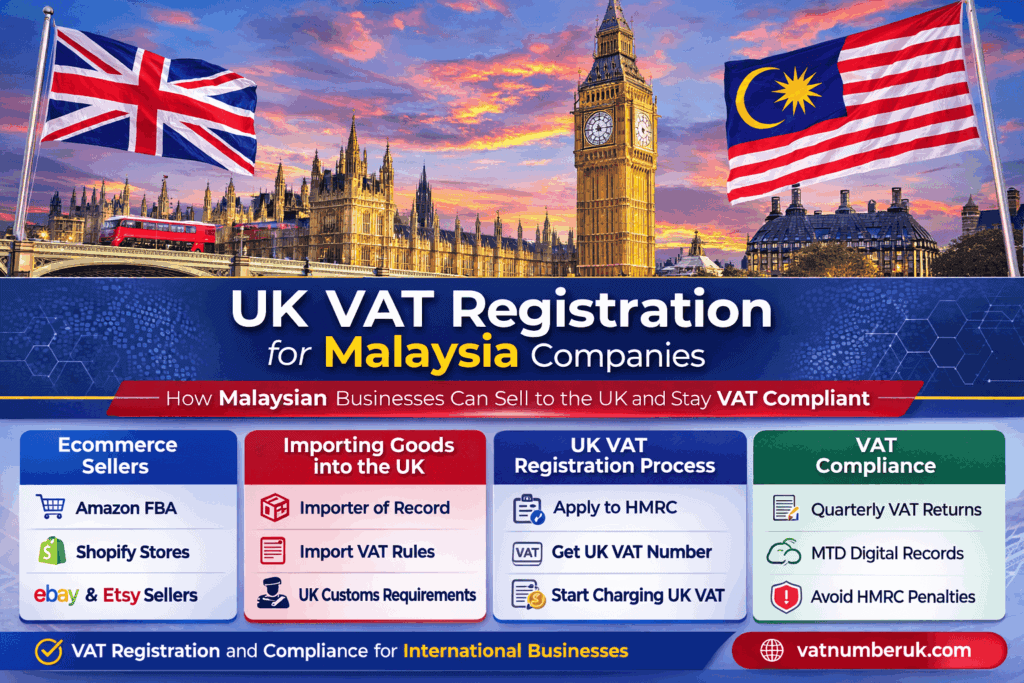
In the past few years, I have worked with a growing number of companies from Malaysia entering the UK market. In most cases, the process starts quite simply — a company begins selling through Amazon, Shopify, or a UK distributor — and only later realises that UK VAT registration is required much earlier than expected.
Malaysia has a strong manufacturing and export economy, and this is reflected in the types of Malaysian businesses that sell to the UK. Many of my Malaysian clients are involved in electronics and electrical components, furniture manufacturing, rubber and latex products, palm oil–based consumer goods, cosmetics, modest fashion, and homeware. The UK imports a significant amount of electrical equipment from Malaysia, and Malaysian-made furniture and latex gloves are widely distributed in the UK through wholesalers and online platforms.
Another common pattern is logistics. Malaysian companies often ship goods in bulk by sea freight from Port Klang or Penang to UK ports such as Felixstowe or Southampton, and then store the goods in Amazon fulfilment centres or third-party warehouses. Once stock is physically in the UK, VAT obligations usually begin at that point, not when the company reaches a certain sales level.
This is why UK VAT registration for Malaysia companies is something that should be planned in advance, not dealt with after the business is already trading.
Do Companies from Malaysia Need UK VAT Registration?
Yes, many Malaysian companies do need to register for UK VAT, even if they have no office, staff, or company registered in the UK.
This is one of the most common misunderstandings. Business owners often assume that VAT only applies if they open a UK company. In reality, UK VAT rules are based mainly on where the goods are located and where the customer is based, not where the company is incorporated.
A Malaysian company may need UK VAT registration if:
- Goods are stored in the UK
- Goods are imported into the UK in the company’s name
- The company sells goods to UK customers
- The company uses Amazon FBA in the UK
- The company uses a UK fulfilment centre
- The company acts as the importer of record
For foreign companies, there is often no VAT threshold. This means you may need to register from your first sale in the UK.
So if you are planning to register VAT UK from Malaysia, the key question is not whether you have a UK company, but whether your goods or customers are in the UK.
Common Scenarios When Businesses from Malaysia Must Register for UK VAT
Let me go through the most common situations where Malaysian companies are required to register for VAT in the UK. These are based on real structures that I see regularly.
Storing Goods in UK Warehouses
Many Malaysian manufacturers ship products in bulk to the UK and store them in a warehouse for local distribution. This is very common for:
- Furniture manufacturers from Johor
- Lighting and electrical product manufacturers from Penang
- Latex and rubber product manufacturers
- Kitchenware and homeware producers
- Cosmetic brands producing in Malaysia
Once goods are stored in the UK and sold to UK customers, the Malaysian company must usually obtain a VAT number UK and charge UK VAT on sales.
Amazon FBA Fulfilment
This is probably the most common scenario. The typical structure looks like this:
A Malaysian company manufactures products → ships bulk stock to Amazon warehouse in the UK → Amazon delivers to UK customers.
In this case, the goods are located in the UK at the moment they are sold to the customer. That triggers UK VAT registration, and Amazon will normally require a VAT number once your sales increase.
Importing Goods into the UK
If your Malaysian company is the importer of record when goods enter the UK, you will normally need:
- UK EORI number
- UK VAT registration
This applies to many Malaysian export sectors, including:
- LED lighting and electrical parts
- Motorcycle parts and accessories
- Office furniture
- Plastic household goods
- Beauty and skincare products
- Food products and ingredients using palm oil
Selling Through Shopify or Your Own Website
Many Malaysian brands now sell directly to UK consumers through Shopify stores. This is especially common for modest fashion brands, halal cosmetics, and niche consumer products manufactured in Malaysia.
Even if you ship from Malaysia directly to the UK, VAT can still apply depending on how the goods are imported and delivered. In some cases, it is still beneficial to register for UK VAT so that you can reclaim import VAT and work with UK fulfilment partners more easily.
UK VAT Rules for Ecommerce Sellers from Malaysia
Most Malaysian businesses selling to the UK use one of the main ecommerce platforms:
- Amazon
- Shopify
- eBay
- Etsy
Each platform creates slightly different VAT obligations.
Amazon
If you use Amazon FBA and store goods in the UK, you must register for UK VAT. This is one of the most common reasons Malaysian companies contact me. Amazon may also suspend or restrict accounts if VAT registration is required but not completed.
Shopify
Shopify is often used by Malaysian brands selling:
- Modest fashion
- Cosmetics and skincare
- Health supplements
- Home decor
- Handmade products
- Niche lifestyle products
If goods are shipped in bulk to the UK and delivered locally, VAT registration is required. If goods are shipped per order from Malaysia, the VAT treatment depends on the import structure, but many companies still choose UK VAT registration to simplify operations.
eBay
Malaysian sellers on eBay UK often sell electronics accessories, refurbished electronics, tools, and specialist parts. If goods are shipped from UK stock, VAT registration is required.
Etsy
Etsy is popular with Malaysian sellers offering batik products, handmade crafts, personalised gifts, and wedding accessories. If stock is held in the UK, VAT registration becomes necessary.
UK VAT for ecommerce sellers is an area where many foreign companies make mistakes, particularly when they start using UK fulfilment centres without realising the VAT consequences.
Unique VAT Considerations for Businesses from Malaysia
Malaysia has a very specific export profile, and this affects how Malaysian companies typically structure their UK sales.
Malaysia is one of the world’s largest exporters of electrical and electronic components, and many Malaysian companies in Penang and Selangor manufacture components that are later sold in the UK either directly to consumers or through distributors. If these components are imported into the UK in the Malaysian company’s name, VAT registration is usually required.
Malaysia is also a major producer of rubber and latex products, including medical gloves. During and after the pandemic, many Malaysian manufacturers began supplying UK buyers directly and storing stock in UK warehouses to ensure faster delivery. This warehouse model almost always requires UK VAT registration.
Another sector I often see is furniture manufacturing. Malaysian wooden furniture is exported to the UK and sold through online marketplaces or UK distributors. Some Malaysian furniture companies now keep stock in UK fulfilment centres so they can offer faster delivery to UK customers, which again creates a VAT registration requirement.
There is also a growing number of Malaysian brands in halal cosmetics, skincare, and modest fashion entering the UK market through Shopify and Amazon. These businesses often start by shipping from Malaysia but later move to UK fulfilment to reduce delivery times. That change in logistics is usually the moment when UK VAT registration becomes necessary.
In terms of logistics, I frequently see shipping routes such as:
- Port Klang to Felixstowe
- Penang to Southampton
- Johor to London Gateway
Once goods arrive in the UK and are imported, VAT must be handled correctly, and this is where many companies realise they need a UK VAT number.
How Businesses from Malaysia Can Register for UK VAT
The VAT registration process for Malaysian companies is quite structured, but HMRC will usually ask questions about how the business operates, especially if ecommerce and importing are involved.
The typical process looks like this:
- Review the business model and confirm VAT registration is required
- Prepare company documents
- Submit VAT registration application to HMRC
- HMRC reviews the application and may ask questions
- VAT number is issued
- Register for Making Tax Digital (MTD)
- Start submitting VAT returns
Foreign companies cannot always complete the process through the standard UK online registration, so the application is often submitted with supporting documents and explanations about the supply chain.
Documents Required for UK VAT Registration
Malaysian companies are usually asked to provide the following documents:
- Certificate of Incorporation
- Company registration documents from Malaysia
- Memorandum and Articles of Association
- Passport copies of directors
- Proof of business activity (website, Amazon store, Shopify store, contracts, invoices)
- Description of business activities
- Explanation of how goods move from Malaysia to the UK
- UK warehouse or fulfilment agreement if goods are stored in the UK
HMRC often asks detailed questions about the supply chain, especially where goods are imported, stored, and delivered.
How Long UK VAT Registration Takes
In most cases, UK VAT registration for foreign companies takes between 4 and 8 weeks.
However, the timeline depends heavily on how clear the business model is and how quickly HMRC receives the required documents and answers to their questions. If HMRC needs more information about how the Malaysian company sells goods in the UK, the process can take longer.
Planning VAT registration before goods arrive in the UK usually prevents delays at customs and problems with marketplaces.
UK VAT Compliance Requirements
Once the company is VAT registered, there are ongoing compliance obligations.
Malaysian companies with UK VAT registration must:
- Submit VAT returns, usually every 3 months
- Keep digital accounting records
- Comply with Making Tax Digital (MTD)
- Charge VAT on UK sales
- Pay VAT to HMRC
- Keep import and export records
- Keep purchase invoices and sales invoices
Making Tax Digital means VAT returns must be submitted using compatible accounting software such as Xero, QuickBooks, or similar systems. Manual submissions are no longer allowed for most businesses.
This is why many foreign companies appoint an accountant or VAT agent in the UK to handle ongoing compliance.
Professional Help with UK VAT Registration
Many Malaysian companies prefer to work with a UK VAT specialist because the rules for UK VAT for foreign companies can be complicated, particularly when ecommerce, importing, and fulfilment centres are involved.
VATNumberUK helps Malaysian companies with:
- UK VAT registration for Malaysia companies
- Register VAT UK from Malaysia
- Obtaining a VAT number UK
- EORI registration
- Making Tax Digital setup
- VAT return submissions
- Communication with HMRC
- Ongoing VAT compliance
If your company is based in Malaysia and you are selling goods to customers in the UK, it is important to check your VAT position early. Fixing VAT problems later is always more complicated than registering correctly from the start.
If you are a Malaysian company planning to sell in the UK, contact VATNumberUK for advice on UK VAT registration and ongoing compliance.