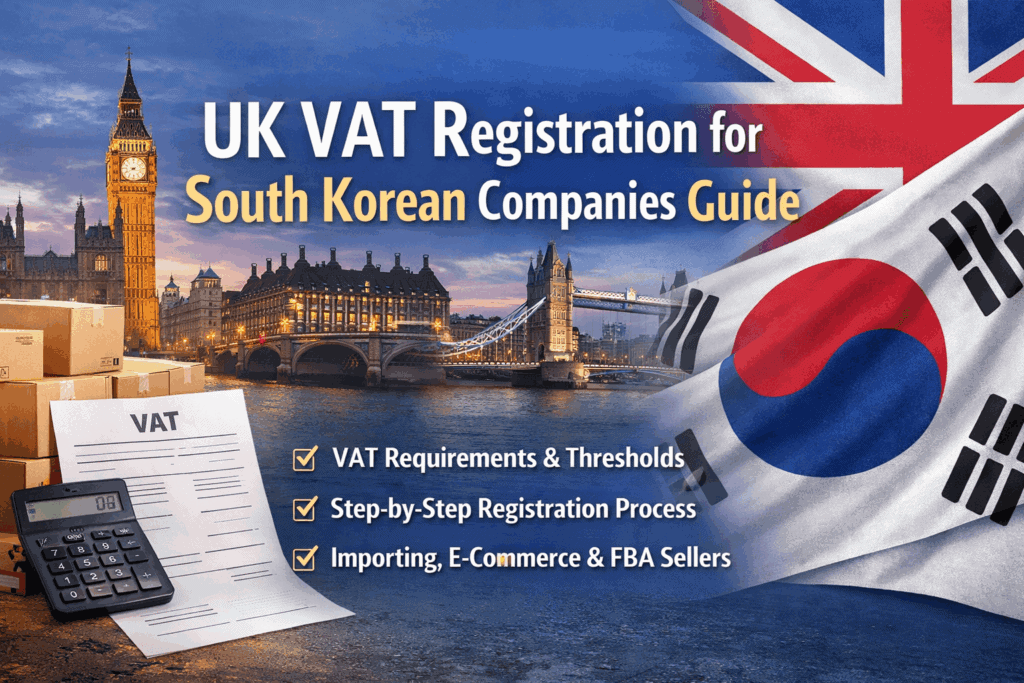
South Korean companies have become increasingly active in international trade over the past decade, and the United Kingdom is often one of the first Western markets they enter. The UK offers a large consumer market, efficient logistics infrastructure, and strong demand for imported goods — particularly in sectors where South Korean businesses are already globally competitive, such as electronics, cosmetics, beauty products, fashion, and technology.
Many Korean brands now sell directly to British consumers through global marketplaces, their own e-commerce stores, or international distributors. Others ship goods in bulk to the UK where they are stored locally and delivered to customers from domestic warehouses.
While the commercial opportunities are clear, tax compliance is an area where many overseas companies encounter unexpected requirements.
One of the most common issues we see in practice is UK VAT registration.
Many international businesses first become aware of this requirement only after their goods arrive in the United Kingdom, when a freight forwarder asks for a VAT number, or when an online marketplace requests VAT details before allowing further sales.
Another frequent misunderstanding comes from the assumption that the UK still follows EU VAT rules. Since Brexit, the UK operates a completely separate VAT system. As a result, overseas companies often face different obligations than they would when selling into EU countries.
This guide explains when South Korean companies need to register for UK VAT, how the process works, and what international businesses should understand before entering the UK market.
What Is UK VAT Registration for South Korean Companies
UK VAT registration is the process through which a business becomes registered with HM Revenue & Customs (HMRC) for Value Added Tax in the United Kingdom.
Once the registration is completed, HMRC issues a UK VAT number. From that point forward, the company becomes responsible for complying with UK VAT rules.
In practical terms, this means the business must:
- charge VAT on taxable sales made in the UK
- submit periodic VAT returns to HMRC
- maintain proper VAT accounting records
- pay any VAT owed to the UK tax authorities
For South Korean companies entering the UK market, the key point to understand is that VAT registration is often required earlier than many expect.
UK-established businesses can usually rely on a VAT registration threshold before they are required to register. Overseas companies, however, frequently fall outside that protection.
In practice, if a non-UK company is making taxable supplies within the United Kingdom — especially where goods are physically located in the country — VAT registration may be required immediately.
This situation arises regularly for international e-commerce sellers and importers.
When Businesses Need UK VAT Registration
The exact point at which a South Korean company must register for UK VAT depends on how its products enter and move within the UK market.
A common misunderstanding among overseas sellers is the belief that VAT registration becomes necessary only after reaching a certain level of sales.
For UK-based businesses, the VAT threshold currently applies. But when a company is established outside the UK, the rules can be quite different.
In many cases, the obligation arises as soon as the company begins making taxable supplies in the UK.
In practice, this frequently happens when:
- goods are imported into the United Kingdom under the company’s name
- inventory is stored inside the UK
- the company sells products through Amazon UK FBA
- the business acts as the importer of record at the UK border
Under these circumstances, VAT registration may be required even before the first product is sold to a customer.
This is something many international sellers discover only after shipments are already on their way to the UK.
Who Typically Needs It
In our experience assisting international businesses, several types of South Korean companies most commonly require UK VAT registration.
E-commerce brands
Many Korean consumer brands sell directly to UK customers through their own online stores. Beauty products, skincare, electronics accessories, and fashion items are particularly common in this category.
Depending on the logistics model used for shipping and importing goods, VAT registration may be required.
Amazon sellers
A large number of South Korean sellers operate on Amazon’s UK marketplace.
If products are stored in Amazon’s fulfilment centres within the United Kingdom, VAT registration is usually required before inventory is sent to those warehouses.
Importers and distributors
Companies importing goods into the UK for wholesale distribution typically require VAT registration. This applies whether the goods are sold to retailers, distributors, or other businesses.
Businesses storing inventory in UK warehouses
Some international companies use third-party logistics providers (3PL warehouses) in the UK to manage storage and shipping. Once inventory is physically located inside the UK, VAT obligations usually arise.
Companies acting as importer of record
If the South Korean company is responsible for customs clearance and import VAT when goods enter the UK, it may need to be VAT registered in order to manage those tax obligations correctly.
Common Situations That Trigger This Requirement
Certain business models almost always lead to VAT registration requirements for overseas companies.
Understanding these situations in advance can prevent delays and compliance problems later.
Importing goods into the United Kingdom
One of the most frequent triggers is importing goods into the UK under the company’s name.
When a South Korean business acts as importer of record, it becomes responsible for import VAT at the UK border. In order to recover that VAT and account for sales correctly, VAT registration is typically required.
We often see businesses discover this issue when their first shipment reaches a UK port or airport.
Using Amazon UK FBA
Amazon’s fulfilment service allows sellers to store inventory inside its UK warehouse network.
Once products are stored in these facilities, they are considered to be located within the United Kingdom. From a VAT perspective, this means the seller is making domestic supplies.
As a result, VAT registration is normally required before inventory is sent to Amazon’s fulfilment centres.
Storing inventory in UK warehouses
This situation is similar to Amazon FBA but applies to private logistics providers.
Many international brands partner with UK-based fulfilment companies that handle storage, packing, and shipping. The moment goods are stored inside the UK, the business may have VAT obligations.
Selling directly to UK customers
Companies selling products to UK consumers through their own websites may also need VAT registration depending on the structure of the sale.
The determining factor is often who imports the goods into the United Kingdom and how the transaction is structured.
Step-by-Step Process
Registering a South Korean company for UK VAT involves several stages. The process itself is relatively structured, but preparing the correct information is essential.
Step 1 — Determine VAT liability
The first step is analysing whether the company actually needs VAT registration.
This involves reviewing the company’s supply chain and sales model. Key questions include:
- where the goods are located before sale
- who imports the goods into the UK
- whether inventory is stored locally
- whether online marketplaces are involved
In many situations, businesses seek professional advice at this stage to ensure the VAT position is assessed correctly.
Step 2 — Prepare the application
Once the need for VAT registration is confirmed, an application must be submitted to HMRC.
The application typically includes detailed information about the business, such as:
- company registration details in South Korea
- description of business activities
- explanation of UK trading plans
- information about supply chains and logistics
HMRC may request additional clarification if the company’s structure or sales model is complex.
Step 3 — Receive the VAT number
After reviewing the application, HMRC will issue a UK VAT number and confirm the effective registration date.
From that point onward, the company must begin complying with UK VAT obligations, including charging VAT where required and submitting periodic VAT returns.
Documents Required
HMRC usually requires supporting documentation when processing VAT registrations for overseas companies.
The exact requirements can vary depending on the nature of the business, but commonly requested documents include:
- certificate of incorporation of the South Korean company
- company registration records
- details of directors and shareholders
- description of business activities
- evidence of planned UK trading activity
- shipping or import documentation
- agreements with online marketplaces or logistics providers
In some cases, HMRC may also request proof of warehouse arrangements or contracts with fulfilment partners operating in the UK.
Providing clear documentation at the beginning of the process can significantly reduce delays.
Common Mistakes Businesses Make
When helping overseas companies register for UK VAT, we frequently see the same misunderstandings repeated.
Assuming EU VAT rules still apply
A common mistake we see is assuming that EU VAT rules still apply after Brexit. The UK now operates a separate VAT system with its own rules for imports and cross-border trade.
Waiting too long to register
Some companies only begin considering VAT registration after shipments are already arriving in the UK.
At that point, the process can delay customs clearance or disrupt marketplace operations.
Misunderstanding the importer of record
Many businesses are unclear about who legally acts as importer of record. This detail determines who is responsible for import VAT and often influences VAT registration requirements.
Ignoring marketplace compliance rules
Online marketplaces frequently request VAT numbers from sellers. Failure to provide a valid registration can lead to restrictions on selling accounts.
Risks and Penalties
Operating in the UK without the required VAT registration can create significant problems.
HMRC has the authority to impose penalties for late registration and assess unpaid VAT retrospectively.
In practical terms, this may involve:
- paying VAT on past sales
- interest charges on overdue tax
- penalties for non-compliance
For international sellers, this can quickly become expensive, especially if the business did not collect VAT from customers at the time of sale.
Logistics providers and marketplaces may also refuse to handle goods or continue cooperation if VAT compliance issues arise.
How Professional VAT Assistance Helps
For many South Korean companies entering the UK market, working with VAT specialists simplifies the process considerably.
Professional advisors can help businesses:
- determine whether VAT registration is required
- structure supply chains in a tax-efficient way
- prepare and submit HMRC VAT applications
- communicate with HMRC during the registration process
- manage ongoing VAT reporting obligations
For international companies unfamiliar with UK tax procedures, professional guidance often prevents costly mistakes and delays.
FAQ
Do South Korean companies always need UK VAT registration to sell in the UK?
No. The requirement depends on how goods are supplied and whether the company imports products into the United Kingdom or stores inventory locally.
Is there a VAT threshold for overseas businesses?
In many situations involving imported goods or UK-based inventory, overseas companies may need to register for VAT from the first taxable activity.
How long does UK VAT registration take?
Processing times vary depending on HMRC workload and verification procedures, but overseas registrations typically take several weeks.
Can South Korean companies reclaim UK import VAT?
Yes. Once VAT registered, businesses can normally reclaim import VAT paid on goods entering the United Kingdom, provided standard VAT rules are satisfied.
Do Amazon sellers from South Korea need a UK VAT number?
In most cases, yes. If products are stored in Amazon’s UK warehouses or imported under the seller’s name, VAT registration is usually required.
Is a UK director required to obtain VAT registration?
No. A South Korean company can register for UK VAT without appointing a UK resident director.
If your South Korean company plans to expand into the UK market, understanding VAT obligations early can prevent unexpected complications later.
Working with specialists experienced in UK VAT registration for international businesses can make the process significantly smoother, ensuring that your company remains compliant while focusing on growth in the UK market.