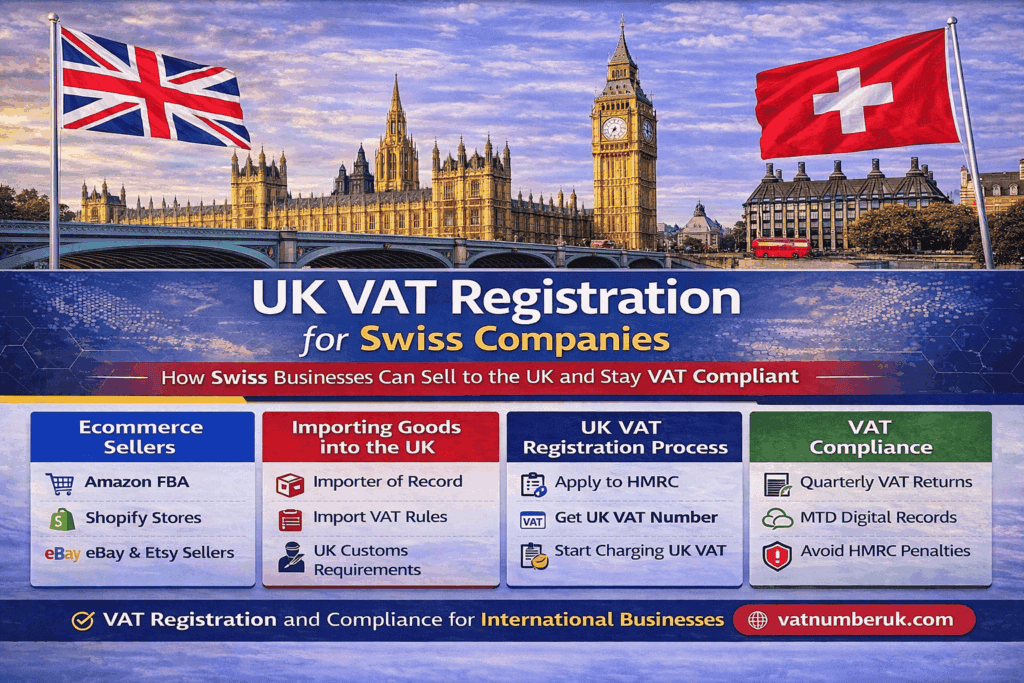
Companies based in Switzerland have always been strongly export-oriented. Even though Switzerland is not part of the European Union, Swiss manufacturers and ecommerce brands regularly sell products across Europe and to the United Kingdom.
The UK remains one of the most important international markets for Swiss exporters. British customers actively buy Swiss goods ranging from luxury watches and precision instruments to sports equipment and specialty food products. In addition to traditional trade, many Swiss companies are now reaching UK customers through online channels such as Amazon, Shopify, eBay, and Etsy.
At first glance, selling to the UK from Switzerland may appear straightforward. A company sets up shipping, accepts orders from British customers, and begins exporting goods. However, from a tax perspective, the situation can become more complicated once goods start moving through the UK supply chain.
Since the UK left the European Union following Brexit, Swiss companies are treated as foreign businesses trading with the UK. This means certain activities can trigger mandatory UK VAT registration, even if the company has no physical office or employees in the UK.
In practice, I often see Swiss business owners discover these obligations only after their sales begin to grow. Understanding when UK VAT registration becomes necessary and how the process works can prevent delays with customs, marketplace restrictions, or compliance issues with HM Revenue & Customs.
This guide explains when Swiss businesses must obtain a VAT number UK, how the registration process works, and what obligations apply once registration is completed.
Do Companies from Switzerland Need UK VAT Registration?
In many cases, yes. Swiss companies selling goods to customers in the UK may need UK VAT registration for Switzerland companies, even if the business itself remains fully based in Switzerland.
This sometimes surprises business owners. A Swiss company might operate from Zurich or Geneva, manufacture products locally, and ship internationally without any physical presence in Britain. Despite that, certain business activities still create a UK VAT obligation.
Typical situations where a Swiss company may need to register VAT UK from Switzerland include:
- importing goods into the UK
- storing inventory in UK warehouses
- selling through UK fulfilment centres
- acting as the importer of record
- making taxable supplies to UK customers
Another important point is that the UK VAT threshold generally does not apply to overseas businesses in the same way it applies to domestic companies. If a foreign company performs certain taxable activities in the UK, registration may be required immediately.
For Swiss exporters entering the UK market through ecommerce or distribution networks, reviewing VAT obligations early in the process is highly advisable.
Common Scenarios When Businesses from Switzerland Must Register for UK VAT
When Swiss companies expand into the UK market, several commercial models frequently trigger VAT registration.
Storing Goods in UK Warehouses
Many Swiss brands eventually decide to store inventory inside the UK in order to shorten delivery times.
For example, a manufacturer based in Lausanne that sells high-end coffee machines may begin shipping bulk inventory to a logistics centre near Manchester or Birmingham. From there, orders can be delivered to customers across the UK within a day or two.
From a VAT perspective, however, storing goods inside the UK typically means the company is making domestic UK sales. Once inventory is located in Britain, the business usually needs to obtain a VAT number UK and account for VAT on those sales.
This situation is particularly common for premium consumer brands that want to compete with local UK retailers on delivery speed.
Selling Through Amazon FBA
Another common scenario involves Swiss companies using Fulfilment by Amazon (FBA).
Many ecommerce businesses list their products on Amazon and ship inventory to Amazon warehouses located across the UK. Amazon then handles storage, packing, and shipping directly to customers.
Operationally this works extremely well. From a VAT perspective, however, it normally triggers a requirement to obtain UK VAT registration.
Because the goods are stored in the UK before they are sold, the seller is considered to be making taxable supplies within the country.
Swiss brands selling outdoor equipment, watches, or premium accessories frequently use this model when entering the British market.
Ecommerce Sales to UK Customers
Some Swiss companies sell directly to UK consumers through their own ecommerce websites built on Shopify.
Initially, orders may simply be shipped directly from Switzerland to the UK. In those cases, the VAT treatment depends on how the goods are imported and who is responsible for customs clearance.
However, once the company begins importing inventory into the UK in bulk or storing goods locally, UK VAT registration typically becomes necessary.
Many fast-growing ecommerce brands move to this model once their UK sales volume increases.
Importing Goods into the UK
Another situation that frequently triggers VAT obligations is when a Swiss company imports goods into the UK.
For example, a Swiss manufacturer of laboratory equipment may ship products directly to British distributors or research institutions. If the Swiss business acts as the importer of record, it will normally need a VAT number UK to account for import VAT and subsequent domestic sales.
This situation is particularly common for companies operating in Switzerland’s strong medical technology and engineering sectors.
UK VAT Rules for Ecommerce Sellers from Switzerland
Ecommerce has become one of the most important ways Swiss businesses enter international markets, including the UK.
Switzerland has a well-developed ecosystem of direct-to-consumer brands, especially in areas such as outdoor equipment, premium consumer electronics, and luxury accessories.
Amazon Sellers
Many Swiss brands selling internationally rely on Amazon to reach UK customers.
When sellers use Amazon’s fulfilment centres within the UK, the inventory is physically located in Britain. As a result:
- the seller usually needs UK VAT registration
- VAT must be charged on applicable sales
- regular VAT returns must be submitted to HM Revenue & Customs
This is one of the most common situations where Swiss ecommerce businesses require UK VAT for foreign companies.
Shopify Stores
Independent ecommerce websites built on Shopify are also widely used by Swiss companies.
These stores often operate internationally from day one, offering English-language websites and international shipping options.
Once inventory is imported into the UK or distributed through local fulfilment partners, VAT registration becomes necessary in most cases.
eBay and Etsy Sellers
Smaller exporters frequently sell through marketplaces such as eBay and Etsy.
These platforms are particularly popular with Swiss businesses selling:
- handmade jewellery
- artisan watches
- design products
- niche outdoor equipment
Even smaller sellers should be cautious. If goods are imported into the UK or stored locally before sale, VAT registration may still be required.
Unique VAT Considerations for Businesses from Switzerland
Swiss companies entering the UK market often come from highly specialised industries, and this shapes how they approach cross-border sales.
Major Swiss Export Industries
Several sectors dominate Switzerland’s export economy. These include:
- pharmaceuticals and biotechnology
- medical devices and precision instruments
- luxury watches and jewellery
- advanced machinery and engineering equipment
- specialty food products such as chocolate and coffee
Pharmaceutical products represent one of Switzerland’s largest export categories, while Swiss watches remain globally recognised luxury items with strong demand in the UK.
Popular Products Sold to the UK
In ecommerce and consumer markets, Swiss businesses frequently export products such as:
- premium sports equipment for skiing, hiking, and mountaineering
- luxury watches and accessories
- high-end coffee machines and kitchen appliances
- specialty chocolate and gourmet food products
- precision cycling components
British consumers tend to associate Swiss products with reliability and high manufacturing standards, which gives Swiss brands a strong competitive position.
Typical Market Entry Strategy
Many Swiss companies enter the UK market gradually.
A common scenario might look like this:
- A Zurich-based brand launches an English-language ecommerce website targeting UK customers.
- Early orders are shipped directly from Switzerland.
- As demand increases, the company moves stock to a UK fulfilment warehouse or Amazon FBA network.
- At that stage, UK VAT registration becomes necessary.
This phased expansion approach allows businesses to test demand before committing to local distribution infrastructure.
How Businesses from Switzerland Can Register for UK VAT
Registering for UK VAT as a foreign company is a fairly structured process.
Typically, the steps involve:
- Assessing whether VAT registration is required
The company’s supply chain and UK sales activities are reviewed. - Preparing the VAT registration application
This includes information about the business, directors, and commercial activities. - Submitting the application to HMRC
The application is reviewed by HM Revenue & Customs. - Receiving the UK VAT number
Once approved, the company receives an official VAT registration certificate. - Setting up VAT accounting procedures
Systems must be in place to report VAT correctly.
Documents Required for UK VAT Registration
Swiss companies typically need to provide several documents during the registration process.
These usually include:
- certificate of incorporation
- commercial register extracts
- passport copies of company directors
- proof of business activities
- agreements with logistics providers or ecommerce platforms
- supply chain documentation explaining how goods enter the UK
In some situations, HM Revenue & Customs may request additional information to verify the nature of the company’s operations.
How Long UK VAT Registration Takes
The processing time for UK VAT registration for foreign companies depends on the complexity of the application.
In straightforward cases, approval typically takes three to six weeks.
More complex applications, particularly those involving multiple supply chains or international logistics structures, may take six to ten weeks.
Businesses planning to launch UK ecommerce operations should take these timelines into account when preparing their market entry strategy.
UK VAT Compliance Requirements
Once a Swiss company receives its VAT number UK, several ongoing obligations apply.
VAT Returns
Most businesses must submit quarterly VAT returns to HM Revenue & Customs.
These returns report:
- total taxable sales
- VAT collected from customers
- VAT paid on purchases
- the net VAT payable or reclaimable
Digital Record Keeping
The UK VAT system now operates under Making Tax Digital (MTD) rules.
This means businesses must maintain digital accounting records and submit VAT returns through compatible software.
VAT Payment Deadlines
VAT payments are generally due one month and seven days after the end of each VAT period.
Failure to submit returns or make payments on time can lead to penalties or interest charges.
Professional Help with UK VAT Registration
For Swiss businesses entering the UK market, VAT rules can initially seem complicated, particularly when ecommerce platforms, import procedures, and fulfilment logistics are involved.
At VATNumberUK, we regularly assist international companies with UK VAT registration for Switzerland companies and other foreign businesses entering the UK market.
Our services include:
- VAT registration for foreign companies
- ecommerce VAT structuring advice
- Amazon FBA VAT compliance
- VAT return preparation
- communication with HM Revenue & Customs
We work with Swiss exporters, ecommerce brands, and technology companies that need to register VAT UK from Switzerland.
If your business plans to start selling goods or services in the UK, obtaining the correct VAT registration from the outset will help ensure smooth operations and full compliance with UK tax regulations.
Contact VATNumberUK today for professional assistance with UK VAT registration and ongoing VAT compliance for Swiss companies.