In recent years, more and more companies from Turkey have begun selling their products and services to customers in the United Kingdom. For many Turkish businesses, the UK represents one of the most attractive export markets in Europe. The market is large, purchasing power is high, and British consumers are very comfortable buying products online from international sellers.
For Turkish entrepreneurs, the path into the UK market is often straightforward. A company based in Istanbul, Izmir, or Ankara can open an Amazon account, launch a Shopify store, or list products on eBay and start receiving orders from UK customers within days. Logistics providers and fulfilment warehouses make cross-border selling easier than ever before.
However, once sales to the UK begin, UK VAT rules quickly become relevant. In many situations, businesses from Turkey must obtain a UK VAT number before they can legally sell goods or store inventory in the United Kingdom.
This is something I regularly explain to international clients: VAT registration is not simply a formality. It is a legal requirement in certain circumstances, and getting it right from the beginning prevents problems later with customs, marketplaces, or HMRC.
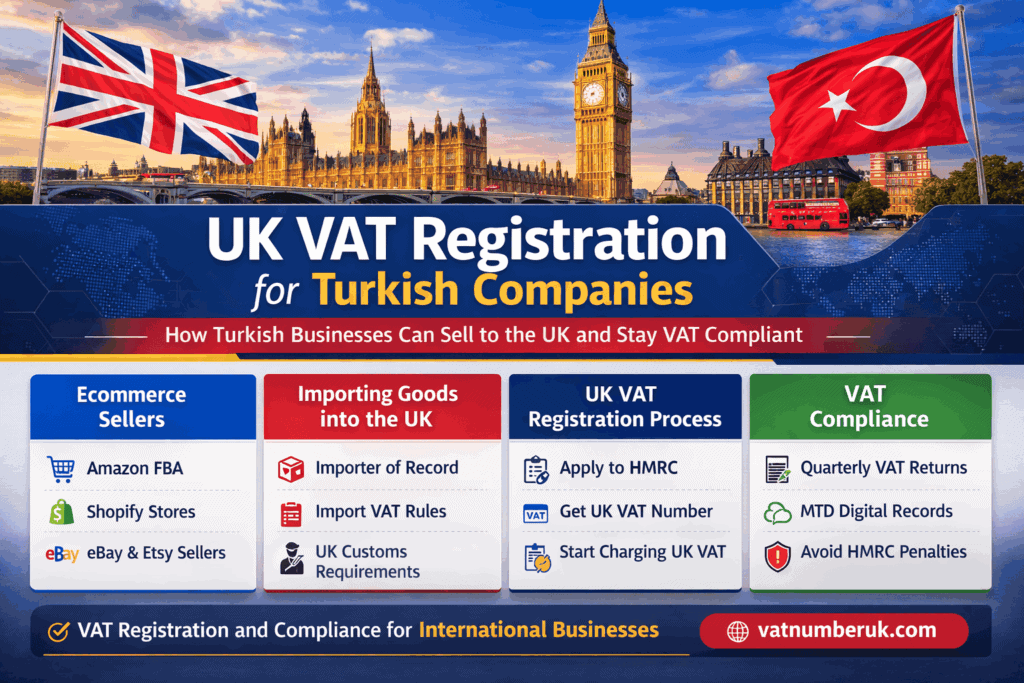
Understanding UK VAT registration for Turkish companies is therefore essential if you plan to sell in the UK. In this guide, we explain when businesses must register VAT UK from Turkey, how the process works, and what Turkish exporters and ecommerce sellers should expect once they become VAT registered.
Do Companies from Turkey Need UK VAT Registration?
In many situations, yes. Companies based in Turkey that sell goods in the UK will need to obtain UK VAT registration.
One important point that many foreign businesses find surprising is that the UK VAT threshold generally does not apply to overseas sellers. UK-based companies can sell up to a certain level before registration becomes mandatory, but foreign companies often need to register from the very first taxable activity.
In practical terms, VAT registration is usually required if a Turkish company:
- imports goods into the United Kingdom
- stores inventory inside the UK
- sells goods located within the UK
- uses UK fulfilment centres or warehouses
- sells through platforms that hold stock in the UK
For example, imagine a Turkish company manufacturing kitchen appliances in Bursa. The company decides to ship several pallets of goods to a UK logistics warehouse in order to offer next-day delivery to British customers. Because the goods are physically stored in the UK and sold locally, the company must register for UK VAT.
Another common scenario involves ecommerce. A Turkish brand selling clothing through Amazon might send inventory to an Amazon fulfilment centre in the UK. Once those products are stored there, Amazon begins delivering them to UK customers. At that point, UK VAT registration becomes mandatory.
These situations are extremely common for international sellers entering the UK market.
Common Scenarios When Businesses from Turkey Must Register for UK VAT
Over the years, I have worked with many Turkish exporters entering the UK market, and several business models appear again and again. Certain activities almost always trigger UK VAT registration for foreign companies.
Storing Goods in UK Warehouses
Many Turkish companies store goods in the UK to reduce delivery times and improve customer experience.
Typical warehousing options include:
- third-party fulfilment providers
- Amazon fulfilment centres
- independent logistics warehouses
- distribution centres operated by partners
Once goods are physically located in the UK and sold to UK customers, those sales are treated as domestic UK supplies. As a result, the business must obtain a UK VAT number.
Selling Through Amazon FBA
Amazon is one of the most popular ways for Turkish companies to sell internationally.
Under the Amazon FBA (Fulfilment by Amazon) model, sellers send inventory to Amazon warehouses in the UK. Amazon then stores the products and ships them directly to customers when orders are placed.
Because the inventory is stored in the UK, the seller is considered to be making taxable supplies within the country. In most cases, Amazon sellers must register for UK VAT before using FBA services.
Without VAT registration, Amazon may suspend listings or restrict account functionality.
Selling Through Ecommerce Platforms
Many Turkish brands sell directly to UK consumers using ecommerce platforms such as:
- Shopify
- WooCommerce
- eBay
- Etsy
The VAT implications depend largely on where the goods are located.
If products are shipped directly from Turkey to individual UK customers, VAT treatment depends on the value of the goods and how the import process is structured.
However, once inventory is imported into the UK and sold locally, VAT registration becomes necessary.
Importing Goods into the UK
Another common trigger is acting as the importer of record when goods enter the UK.
This typically occurs when a Turkish company:
- ships bulk inventory to the UK
- clears goods through UK customs
- stores the products locally before selling them
In these situations, VAT registration is normally required because the business is operating within the UK supply chain.
UK VAT Rules for Ecommerce Sellers from Turkey
Ecommerce is by far the most common way Turkish businesses expand into the UK market. Each platform has its own structure, but the VAT implications are usually quite similar.
Amazon
Amazon is extremely popular among Turkish exporters, particularly those selling consumer goods.
Products commonly sold by Turkish Amazon sellers include:
- clothing and textiles
- kitchen accessories
- jewellery
- home decoration items
- small consumer goods
When inventory is stored in Amazon fulfilment centres located in the UK, the seller must obtain UK VAT registration for Turkish companies.
Amazon itself often requires sellers to provide a VAT number in order to continue operating once inventory enters the UK.
Shopify
Some Turkish brands prefer to operate independent online stores rather than relying on marketplaces.
A typical structure might involve:
- marketing through social media or Google Ads
- selling through a Shopify store
- shipping products to UK customers
If inventory is stored within the UK or imported in bulk for domestic distribution, the company will normally need UK VAT registration.
eBay
eBay continues to attract international sellers, including many businesses from Turkey.
Products frequently sold by Turkish eBay sellers include:
- automotive accessories
- electronics accessories
- niche consumer products
- hobby or specialist items
If those products are stocked in the UK or imported regularly, the seller will generally need a UK VAT number.
Etsy
Turkey has a strong tradition of craftsmanship, and many Turkish artisans sell products globally through Etsy.
Popular products include:
- handmade jewellery
- ceramics
- decorative textiles
- traditional crafts
While many small sellers initially ship products directly from Turkey, some eventually expand by storing inventory in the UK. At that point, VAT registration becomes necessary.
Unique VAT Considerations for Businesses from Turkey
Turkey has a very strong export sector, and several industries regularly expand into the UK market. Understanding these industries helps explain how UK VAT for ecommerce sellers commonly applies to Turkish businesses.
Textile and Fashion Exports
Turkey is one of the world’s leading textile producers. Many Turkish companies manufacture:
- clothing
- sportswear
- fashion accessories
- footwear
These products are extremely popular on platforms like Amazon UK.
Many Turkish clothing brands ship inventory directly to UK warehouses so they can offer fast delivery. When this happens, UK VAT registration for foreign companies becomes mandatory.
Handmade and Artisan Goods
Turkey also has a thriving artisan economy.
Products commonly exported to the UK include:
- handmade ceramics
- decorative lamps
- glassware
- jewellery
- textiles and rugs
These items often begin as small-scale exports through platforms like Etsy. But when demand increases, sellers frequently move stock to UK fulfilment centres — which triggers VAT registration requirements.
Furniture and Home Products
Turkey is a major furniture manufacturing hub.
Many Turkish manufacturers export:
- furniture
- lighting products
- home decor
- interior design items
If these goods are imported into the UK and sold locally, the company must register VAT UK from Turkey.
Food and Specialty Products
Certain Turkish food brands also sell products in the UK.
Examples include:
- Turkish delight
- olive oil
- spices
- confectionery products
These products are often imported through distributors or ecommerce businesses. When the Turkish company acts as the importer or sells goods within the UK supply chain, VAT registration becomes necessary.
How Businesses from Turkey Can Register for UK VAT
The VAT registration process for overseas companies is generally straightforward, but the application must be prepared carefully.
The typical process involves several steps.
Step 1 — Confirm VAT Registration Requirement
The first step is reviewing the company’s business model.
This involves analysing:
- how goods enter the UK
- where inventory is stored
- how sales are structured
- which ecommerce platforms are used
From this information, it becomes clear whether UK VAT registration for Turkish companies is required.
Step 2 — Prepare Company Documentation
HMRC requires supporting documents to confirm the legitimacy of the business.
Documents issued in Turkish usually need to be translated into English.
Step 3 — Submit the VAT Application
The VAT registration application is submitted to HMRC (HM Revenue & Customs).
Foreign companies sometimes need to use alternative forms rather than the standard UK online registration system.
Step 4 — Receive the UK VAT Number
Once HMRC approves the application, the company receives a UK VAT number.
At that point, the business can legally:
- sell goods within the UK
- import goods using VAT mechanisms
- issue VAT invoices where required
Documents Required for UK VAT Registration
When applying for UK VAT registration for Turkish companies, HMRC usually requests several supporting documents.
Common documents include:
- company incorporation certificate
- company registration extract
- passport copies of company directors
- proof of trading activity
- description of the business model
- website or ecommerce store details
- supplier or logistics agreements
Depending on the business model, HMRC may also request additional information.
For example, Amazon sellers may need to provide Amazon seller account details or fulfilment agreements.
How Long UK VAT Registration Takes
Processing times for UK VAT registration for foreign companies can vary depending on the complexity of the case.
In most situations, registration takes:
- approximately 3–6 weeks for straightforward applications
- 6–10 weeks if HMRC requests additional clarification
Delays often occur when:
- documents are incomplete
- translations are missing
- business activities are unclear
In my experience, applications prepared by VAT specialists tend to move more quickly because the required information is provided correctly from the beginning.
UK VAT Compliance Requirements
Receiving a VAT number is only the first step. Once registered, businesses must comply with ongoing UK VAT obligations.
VAT Returns
Most VAT-registered companies must submit VAT returns every three months.
A VAT return reports:
- total sales made during the period
- VAT collected from customers
- VAT paid on expenses
- the amount payable to HMRC
Record Keeping
Businesses must maintain accurate records, including:
- invoices issued to customers
- purchase invoices
- import documentation
- accounting records supporting VAT calculations
These records must generally be retained for several years.
Making Tax Digital (MTD)
Many VAT-registered businesses must also comply with the Making Tax Digital (MTD) system.
This requires companies to maintain digital accounting records and submit VAT returns through compatible software.
Failure to comply with UK VAT rules can lead to penalties, interest charges, and compliance investigations, so proper accounting procedures are essential.
Professional Help with UK VAT Registration
For companies entering the UK market from Turkey, navigating VAT regulations can feel complicated at first. International trade, ecommerce platforms, import procedures, and tax compliance all intersect.
Working with specialists who deal with these issues every day can make the process much easier.
VATNumberUK assists international businesses with UK VAT registration for Turkish companies and ongoing compliance requirements.
Our services include:
- UK VAT registration for foreign companies
- VAT advice for ecommerce sellers
- Amazon FBA VAT support
- preparation and submission of VAT returns
- ongoing VAT compliance assistance
We regularly work with Turkish ecommerce sellers, exporters, and manufacturers who want to expand into the UK market.
If your business plans to sell products to UK customers, obtaining the correct VAT registration from the beginning is essential.
You can contact VATNumberUK for professional guidance on how to register VAT UK from Turkey, obtain your VAT number UK, and ensure that your business operates smoothly and compliantly in the United Kingdom.