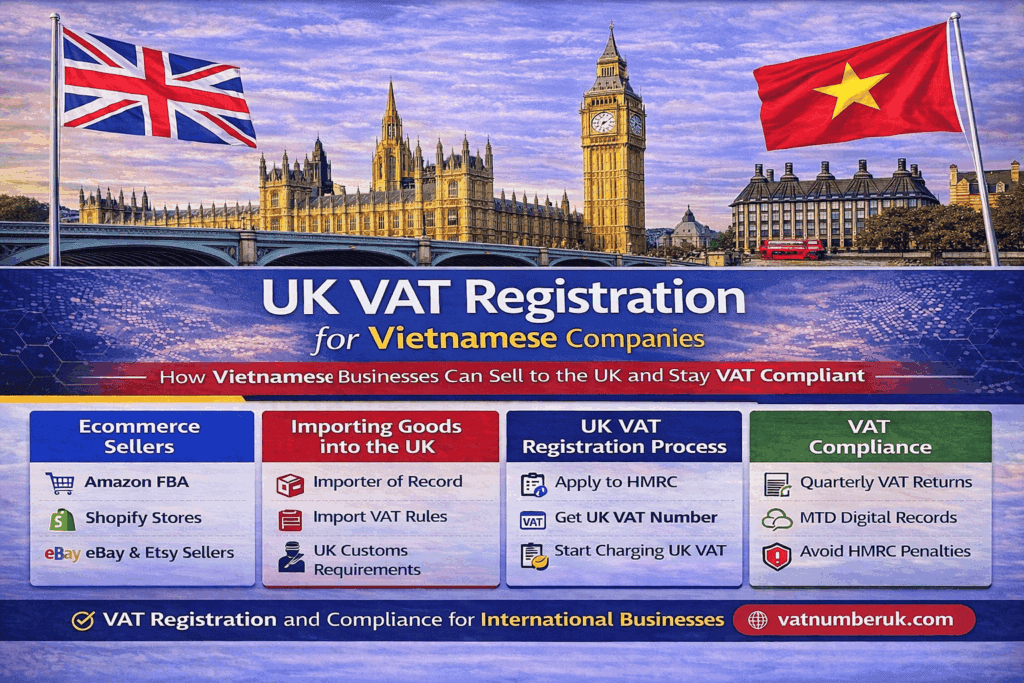
Over the last few years, I have been working with an increasing number of companies from Vietnam that are selling directly to customers in the United Kingdom. In many cases, these are manufacturers who previously sold only in bulk to distributors, but are now moving into ecommerce and direct-to-consumer sales. The UK is an attractive market: customers are comfortable buying online, logistics are reliable, and platforms like Amazon make it relatively easy to enter the market.
Vietnam has a very strong export-focused economy, and that shapes the way Vietnamese businesses typically expand into the UK. The country is one of the world’s largest exporters of textiles, footwear, furniture, and consumer goods. Vietnamese factories produce a huge volume of products that are sold internationally, and more and more Vietnamese companies are now selling under their own brand names rather than only manufacturing for other companies. I also see many Vietnamese businesses selling coffee, homeware, lighting products, and small electronics directly to UK customers through online platforms.
Once a Vietnamese company starts selling to UK customers, UK VAT becomes an important issue quite quickly. Many business owners assume that because their company is registered in Vietnam, UK VAT does not apply to them. Unfortunately, that is often not the case. A Vietnamese company can be required to register for UK VAT even if it has no office, no staff, and no company in the UK. What matters is where the goods are located, where they are imported, and where the customers are based.
This guide explains when UK VAT registration for Vietnamese companies is required, how the process works, and what to expect after you receive your VAT number UK.
Do Companies from Vietnam Need UK VAT Registration?
This is one of the most common questions I am asked by business owners in Vietnam. The short answer is: yes, many Vietnamese companies do need to register for UK VAT, especially if they are selling physical goods to UK customers.
A foreign company does not need to have a UK company or UK office in order to have a UK VAT obligation. If a Vietnamese business is making taxable supplies in the UK, it may need to register as a non-established taxable person.
The most common situations where UK VAT for foreign companies becomes relevant are:
- Importing goods into the UK
- Storing goods in the UK
- Selling goods that are already located in the UK
- Using UK fulfilment centres
- Selling through Amazon FBA in the UK
- Selling through a Shopify website where goods are shipped from within the UK
One important point that many businesses do not realise is that the UK VAT registration threshold usually does not apply to non-UK companies that store goods in the UK. In many cases, registration is required from the first sale.
So if you register VAT UK from Vietnam, it is usually because your business model involves goods entering the UK supply chain in some way.
Common Scenarios When Businesses from Vietnam Must Register for UK VAT
In practice, I see several typical scenarios with Vietnamese companies entering the UK market.
Storing Goods in UK Warehouses
This is very common for Vietnamese manufacturers, especially in furniture, home décor, lighting, and consumer goods. The company manufactures products in Vietnam, ships them in bulk to the UK, stores them in a fulfilment warehouse, and then sells to UK customers.
For example, a company in Ho Chi Minh City producing wooden furniture may ship a container to a warehouse in Manchester and then sell the products through its website or through online marketplaces. Because the goods are stored and sold in the UK, the Vietnamese company must register for UK VAT.
Amazon FBA Fulfilment
Amazon FBA is one of the main ways Vietnamese companies enter the UK market. I work with many Vietnamese Amazon sellers who sell products such as:
- Phone chargers and cables
- LED lights and electrical accessories
- Kitchen tools and cookware
- Coffee and coffee equipment
- Clothing and textiles
- Bamboo products and eco-friendly household items
If your goods are stored in Amazon’s UK warehouses, you will almost certainly need UK VAT registration for Vietnamese companies.
Importing Goods into the UK
Another common situation is where the Vietnamese company acts as the importer of record. This means the goods are imported into the UK in the name of the Vietnamese company, and then sold to UK customers or UK retailers.
This often happens with:
- Coffee brands importing packaged coffee into the UK
- Textile companies importing clothing for sale to UK retailers
- Furniture companies importing containers of furniture
- Electronics accessory brands importing stock for online sales
If you are the importer and the seller, you will normally need a VAT number UK.
Ecommerce Sales to UK Consumers
Many Vietnamese businesses now sell directly to UK consumers through:
- Shopify websites
- Amazon
- eBay
- Etsy (especially for handmade products and home décor)
If the goods are shipped from within the UK, VAT registration is required. If goods are shipped from outside the UK, the VAT treatment depends on the value of the goods and the sales channel, but VAT registration is still often required, especially if you also import goods in bulk.
UK VAT Rules for Ecommerce Sellers from Vietnam
Ecommerce has changed the way Vietnamese companies sell internationally. Ten years ago, most Vietnamese exporters sold large quantities to UK wholesalers. Now, many sell directly to UK consumers in smaller quantities but higher margins.
Vietnamese sellers commonly use:
- Amazon UK
- Shopify
- eBay
- Etsy
Each platform has slightly different VAT rules, but there are some general principles.
If you store goods in the UK, you need UK VAT registration.
If you import goods into the UK and then sell them, you need UK VAT registration.
If you sell through your own Shopify website and fulfil orders from a UK warehouse, you need UK VAT registration.
Online marketplaces sometimes collect VAT on certain sales, particularly for low-value goods, but this does not always remove your obligation to register. Many Vietnamese businesses use a combination of Amazon and Shopify, and in those cases the seller usually still needs to register VAT UK from Vietnam.
This is why UK VAT for ecommerce sellers is such a common issue for companies from Vietnam.
Unique VAT Considerations for Businesses from Vietnam
Vietnam is quite different from many other countries because a large part of its economy is based on manufacturing and export production. This affects how Vietnamese businesses structure their UK operations and, as a result, how VAT applies.
Vietnam is one of the world’s largest exporters of textiles and footwear, and a significant amount of these products are sold in the UK through online marketplaces and private label brands. I also work with Vietnamese companies exporting furniture and wooden homeware products, which are very popular in the UK market, especially flat-pack furniture and home décor items.
Another major export is coffee. Vietnam is one of the largest coffee producers in the world, particularly Robusta coffee, and in recent years many Vietnamese coffee brands have started selling directly to UK consumers rather than only exporting raw beans. These companies often import roasted coffee into the UK, store it in fulfilment centres, and sell through Shopify or Amazon. This structure almost always requires UK VAT registration.
We also see Vietnamese companies selling:
- LED lighting
- Phone accessories
- Kitchenware
- Garden furniture
- Handmade craft products
- Eco-friendly bamboo products
- Packaging materials
- Tools and hardware
Typical Supply Chains from Vietnam to the UK
From a VAT point of view, the supply chain is very important. The most common structures I see are:
Factory in Vietnam → Container shipped to UK → UK warehouse → Online sales to UK customers
Factory in Vietnam → Amazon FBA UK → Amazon sells to UK customers
Factory in Vietnam → Goods imported into UK → Sold to UK wholesalers
Factory in Vietnam → Direct shipping to UK customers (dropshipping model)
Each of these models has different VAT implications, but in the first three models, VAT registration is usually required.
Because shipping from Vietnam to the UK is typically done by sea freight in large shipments, many Vietnamese companies hold stock in the UK. The moment stock is stored in the UK and sold locally, UK VAT registration becomes necessary.
How Businesses from Vietnam Can Register for UK VAT
The registration process is not complicated, but it does require the correct documentation and a clear explanation to HMRC of what the business is doing.
The typical process looks like this:
- Review the business model and confirm that VAT registration is required
- Gather company documents
- Complete the UK VAT registration application
- Submit the application to HMRC
- HMRC may ask additional questions
- HMRC issues the VAT number
- The company registers for Making Tax Digital
- The company starts submitting VAT returns
Vietnamese companies usually register as non-established taxable persons (NETP) because the business is based outside the UK.
Documents Required for UK VAT Registration
HMRC will normally ask for documents to prove that the Vietnamese company is a real business and that it is trading or planning to trade in the UK.
Typical documents include:
- Certificate of Incorporation in Vietnam
- Company registration documents
- Company charter or constitutional documents
- Passport copies of directors
- Proof of business activity
- Contracts with UK customers or Amazon
- Warehouse or fulfilment agreements
- Import documents
- Shipping documents
- Bank statement for the company
- Description of the business and how goods move from Vietnam to the UK
If documents are in Vietnamese, HMRC may require translations into English.
How Long UK VAT Registration Takes
This is a question I get from almost every client.
In most cases:
- VAT registration takes around 4–8 weeks
- Sometimes it takes 8–12 weeks
- If HMRC asks many questions, it can take longer
It is very important not to wait until the last moment. If you are planning to ship goods to the UK or start selling through Amazon UK, you should start the VAT registration process in advance.
UK VAT Compliance Requirements
Once the company receives its VAT number UK, there are ongoing compliance obligations.
These include:
- Submitting VAT returns (usually every 3 months)
- Keeping digital VAT records
- Following Making Tax Digital (MTD) rules
- Using compatible accounting software
- Issuing VAT invoices where required
- Paying VAT to HMRC
- Keeping import and sales records
This is why many foreign companies use an accountant or VAT agent in the UK to handle ongoing compliance.
Professional Help with UK VAT Registration
Registering for VAT in another country is not just a form — it involves understanding how your supply chain works, how your goods enter the UK, and how you sell to customers.
VATNumberUK works with international businesses and helps with:
- UK VAT registration for Vietnamese companies
- Register VAT UK from Vietnam
- UK VAT for ecommerce sellers
- Amazon FBA VAT registration
- Import VAT and EORI registration
- VAT returns and compliance
- Making Tax Digital setup
If your company in Vietnam is planning to sell in the UK, it is much better to set up VAT correctly from the beginning rather than trying to fix problems later.
Contact VATNumberUK to apply for your VAT number UK and get professional support with UK VAT for foreign companies.