A Complete Guide for Businesses in the GCC and Wider Middle East Selling to the United Kingdom
The Middle East has emerged as one of the most dynamic regions for international trade and e-commerce expansion. Businesses throughout the United Arab Emirates, Saudi Arabia, Qatar, and the wider GCC are increasingly targeting the United Kingdom to scale their international operations.
The UK market remains a major destination for Middle Eastern exporters due to several structural advantages:
- Robust consumer spending across diverse retail sectors
- Advanced e-commerce infrastructure and digital payment systems
- Strong marketplace ecosystems such as Amazon UK
- Consistent demand for imported goods
However, many companies in the Gulf Cooperation Council underestimate the VAT implications of selling into the UK.
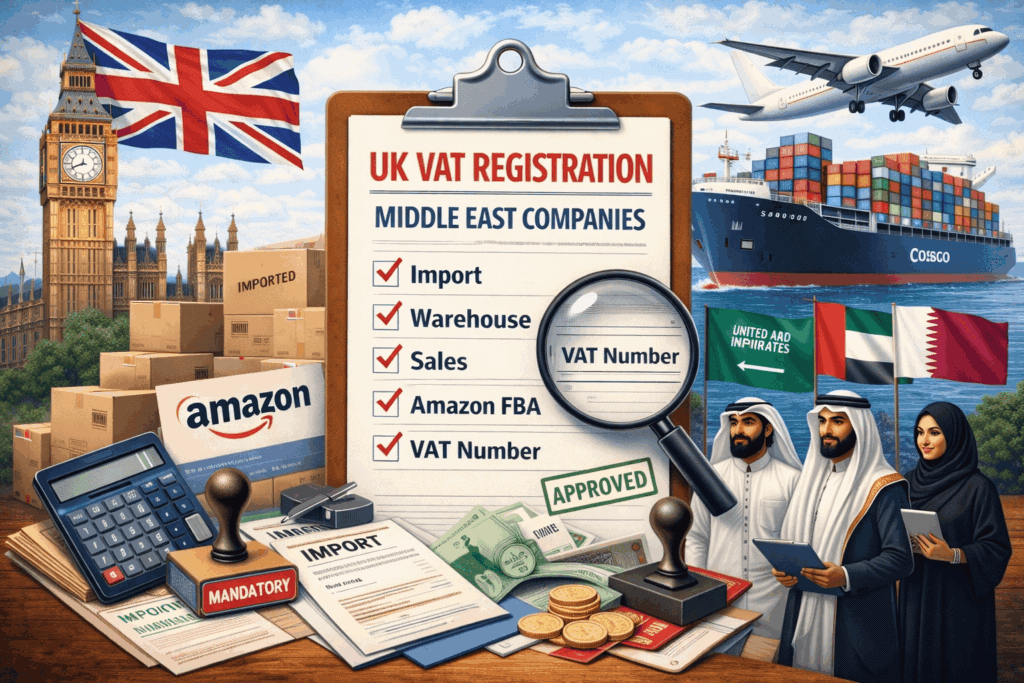
For non-UK businesses, VAT registration is often mandatory from the very first taxable supply, particularly when importing goods or maintaining inventory within the country.
This guide explains when Middle Eastern companies must obtain a UK VAT number and how to ensure compliance before scaling operations.
Why Middle East Companies Frequently Need UK VAT Registration
Businesses across the GCC frequently trigger UK VAT obligations because they:
- Export directly to UK consumers from regional fulfilment hubs
- Operate global e-commerce brands targeting UK buyers
- Store inventory in Amazon UK fulfilment centres
- Act as importer of record when goods enter the UK
- Establish UK distribution channels
Zero VAT Threshold for Overseas Companies
Unlike UK-established businesses, overseas entities generally do not benefit from a VAT registration threshold.
This means that companies based in:
- UAE
- Saudi Arabia
- Qatar
- Kuwait
- Oman
- Bahrain
may be required to register from the first taxable transaction.
When Is UK VAT Registration Required?
Middle Eastern companies typically must register for VAT when they:
- Import goods into Great Britain
- Store inventory in UK warehouses
- Sell goods already located within the UK
- Ship goods directly to UK consumers under DDP delivery terms
Non-Established Taxable Person (NETP)
Middle Eastern businesses trading in the UK are classified as Non-Established Taxable Persons (NETPs).
NETPs must register immediately once a taxable supply occurs.
Scenario 1: Acting as Importer of Record
When a Middle Eastern company is listed as the importer on UK customs documentation, VAT obligations arise immediately.
This scenario is common for:
- Consumer goods exporters
- Electronics suppliers
- Luxury brands
- Health and beauty manufacturers
- Trading intermediaries
Failure to register can result in:
- Retrospective VAT assessments
- Interest charges
- Financial penalties
Potential Financial Consequences
Penalties may include:
- VAT liability on historical imports
- Interest at the Bank of England base rate plus 4%
- Penalties up to 100% of unpaid VAT in severe cases
Scenario 2: Using Amazon UK FBA
Many Middle Eastern companies reach UK customers through Amazon logistics infrastructure.
This typically includes:
- Amazon FBA fulfilment centres
- UK-based 3PL warehouses
- Marketplace storefronts shipping from UK inventory
Why FBA Triggers VAT Registration
If your inventory is stored inside the UK, your business is considered to be making domestic taxable supplies.
VAT registration is therefore required before stock enters the warehouse.
Scenario 3: Direct E-commerce Sales to UK Consumers
Companies shipping products directly from the Middle East to UK households must carefully structure their logistics model.
Key considerations include:
- Delivery terms (DDP vs DAP)
- Importer of record designation
- Customs clearance responsibility
- VAT collection method
Incorrect structuring often leads to VAT exposure and border delays.
No UK VAT Threshold for Overseas Businesses
UK-based businesses benefit from a VAT threshold, but overseas companies generally face a £0 registration threshold.
This means:
- VAT obligations begin from the first taxable supply
- There is no grace period based on turnover
- Digital reporting requirements apply immediately
This rule frequently surprises international exporters entering the UK market.
The UK VAT Registration Process for Middle East Companies
Obtaining a VAT number requires a structured approach to compliance and documentation.
Step 1: Determine VAT Liability Date
The Effective Date of Registration (EDR) determines when VAT obligations begin.
Companies must identify:
- The first taxable supply made in the UK
- The date inventory entered a UK warehouse
- Whether backdated registration is required
Incorrect liability dates may trigger penalties.
Step 2: Prepare Required Documentation
HMRC typically requires the following documentation:
- Company trade licence or commercial registration
- Articles of association
- Director identification and proof of address
- Evidence of trading activity
- Logistics agreements or warehouse contracts
- Business bank statements
Providing clear documentation significantly speeds up application approval.
Step 3: Submit VAT Registration Application
Middle Eastern companies are treated as Non-Established Taxable Persons (NETPs) and are processed through HMRC’s overseas registration unit.
Typical processing timelines include:
- Standard applications: 4–8 weeks
- Complex supply chains: up to 12 weeks
HMRC may request additional clarification regarding supply chains and import responsibility.
Step 4: Receive VAT Number and Begin Compliance
Once approved, your business must begin immediate compliance with UK VAT regulations.
Initial obligations include:
- Displaying the VAT number on invoices and websites
- Charging the correct VAT rate on UK sales
- Filing quarterly VAT returns
- Maintaining digital accounting records
VAT Returns and Ongoing Compliance
After registration, Middle Eastern businesses must maintain full VAT compliance.
Key obligations include
- Quarterly VAT return submissions
- Making Tax Digital (MTD) compliance
- Six-year document retention
- VAT-compliant invoices
Failure to comply can trigger automatic penalties.
Reclaiming Import VAT
VAT registration allows businesses to recover significant costs associated with imports.
Registered companies can reclaim:
- Import VAT on goods entering the UK
- VAT on UK business services
- VAT on warehousing and logistics services
Timely registration ensures these recovery rights remain available.
Country-Specific Considerations
Different Middle Eastern markets interact with UK VAT rules in different ways.
United Arab Emirates
UAE companies frequently act as international logistics hubs and often become importer of record when exporting to the UK.
Saudi Arabia
Saudi manufacturers exporting directly to UK distributors may trigger VAT registration depending on supply chain structure.
Qatar and Other GCC Countries
Exporters from Qatar, Kuwait, Oman, and Bahrain often trigger VAT obligations when maintaining UK inventory or importing goods.
Common VAT Mistakes Middle East Companies Make
Common compliance mistakes include:
- Assuming marketplaces manage VAT obligations
- Waiting for a VAT threshold that does not apply
- Incorrect use of DDP Incoterms
- Failure to implement Making Tax Digital software
- Underestimating UK tax complexity
These errors can result in penalties, account suspensions, and customs delays.
Strategic VAT Planning for Middle East Exporters
Before entering the UK market, businesses should:
- Analyse supply chain structure
- Confirm importer of record
- Assess warehouse requirements
- Determine VAT liability date
- Implement MTD-compliant accounting systems
Strategic planning helps eliminate regulatory risks before expansion.
Should Middle East Companies Appoint a UK VAT Agent?
Many GCC companies appoint a UK VAT specialist to manage compliance.
A VAT agent can assist with:
- VAT registration applications
- HMRC communication
- Quarterly VAT filings
- Compliance monitoring
Professional support reduces risk and ensures smoother market entry.
Registration Timeline
Registration processing times vary depending on application complexity.
Typical timelines include:
- 4–8 weeks for standard applications
- Up to 12 weeks for complex supply chains
Applying early prevents marketplace disruptions.
The Strategic Value of Voluntary VAT Registration
Some Middle Eastern companies choose voluntary VAT registration before trading.
Benefits include:
- Reclaiming import VAT via Postponed VAT Accounting
- Establishing business credibility in the UK
- Simplifying marketplace tax compliance
However, voluntary registration should be evaluated carefully.
UK VAT Compliance Checklist for Middle East Companies
Before trading with the UK, companies should confirm:
- Import structure and importer of record
- Warehouse arrangements
- VAT liability date
- Required corporate documentation
- Making Tax Digital readiness
- VAT return deadlines
Conclusion
For companies across the Middle East selling goods or services to the UK, VAT registration is frequently mandatory from the very first transaction.
Importing goods, storing inventory, or acting as importer of record usually creates immediate VAT obligations.
Understanding these requirements early helps businesses:
- Avoid penalties and backdated tax assessments
- Protect VAT recovery rights
- Ensure uninterrupted access to the UK market
Careful VAT planning allows Middle Eastern exporters to scale their operations in the UK with confidence.