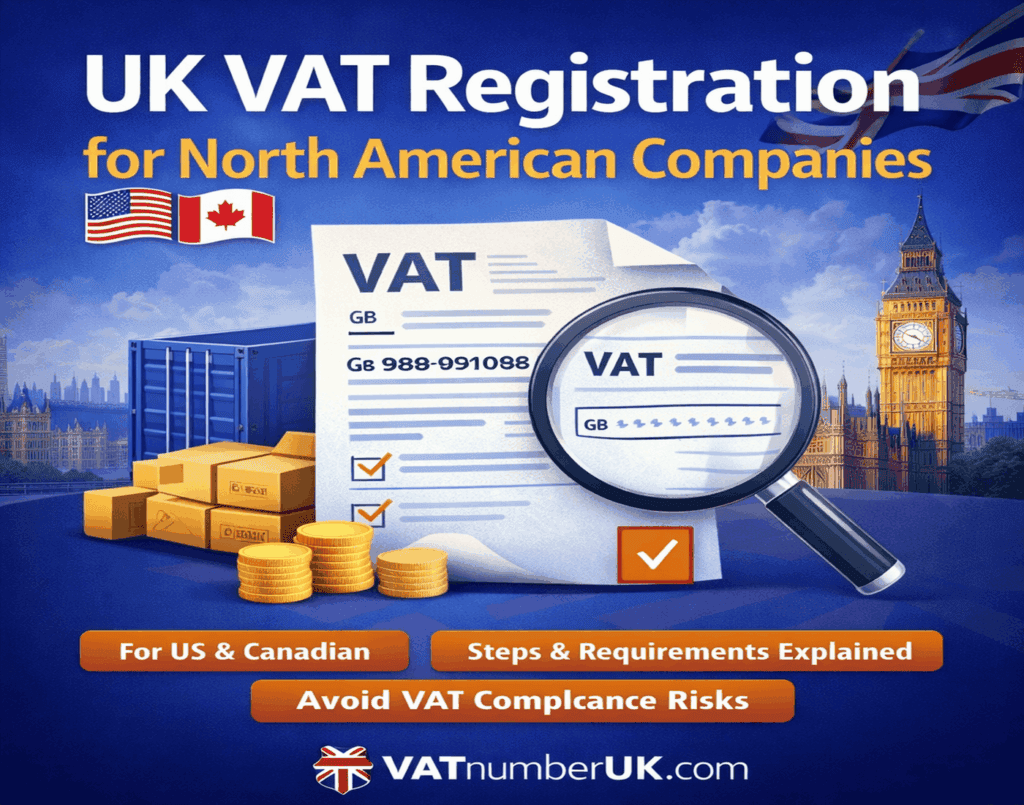
The United Kingdom remains a premier international destination for North American enterprises. An increasing number of firms based in the United States and Canada are reaching UK consumers through sophisticated e-commerce platforms, direct-to-consumer storefronts, and global distribution channels.
However, expanding into the UK market triggers specific VAT obligations that differ fundamentally from US Sales Tax or the Canadian GST/HST. Unlike domestic UK entities, overseas sellers often face mandatory VAT registration from their very first taxable supply, especially when importing goods or maintaining local inventory.
This guide outlines when North American organisations must secure a UK VAT number, the nuances of the application process, and how to establish a compliant structure before scaling your operations within the UK.
Why North American Companies Frequently Need UK VAT Registration
US and Canadian enterprises often expand their reach through several key channels:
- Amazon UK presence: leveraging local fulfilment to reach UK Prime members
- Shopify and DTC brands: managing independent direct-to-consumer storefronts
- Local inventory storage: importing products into specialised UK warehouses
- Importer of record status: taking legal responsibility for customs clearance
- UK distribution: establishing dedicated wholesale supply networks
- Direct-to-consumer shipping: sending individual parcels from North America
These activities often trigger mandatory UK VAT obligations, even if your business maintains no physical office in the United Kingdom.
Many firms mistakenly assume that VAT applies only after reaching a specific turnover threshold. In cross-border scenarios, however, this assumption is frequently incorrect.
When Is UK VAT Registration Required?
A North American company is generally required to register for UK VAT if it:
- manages UK imports as the importer of record
- holds stock in UK fulfilment centres or warehouses
- makes taxable domestic sales within the UK
- structures deliveries where the seller handles VAT obligations
- establishes a fixed establishment such as a branch or office in the UK
In many of these situations, VAT registration becomes mandatory from the very first taxable transaction.
Key VAT Trigger Scenarios for US and Canadian Companies
Importing Goods into the UK
If your company exports goods from the United States or Canada and acts as the importer of record on UK customs declarations, VAT registration is normally required.
This rule applies regardless of:
- annual sales volume
- physical presence in the UK
- the sales platform used
Failing to register can lead to:
- retrospective VAT assessments
- interest on unpaid VAT
- financial penalties imposed by HMRC
Holding Stock in the UK
Many North American companies use fulfilment strategies such as:
- Amazon UK FBA
- third-party logistics providers (3PL)
- multi-country European warehouse networks
If your inventory is physically located in the UK, your business is considered to be making domestic supplies. This means VAT registration is usually required before stock is placed in the warehouse.
Direct Ecommerce Sales to UK Consumers
North American ecommerce brands shipping directly to UK customers must evaluate several factors:
- delivery terms such as DDP or DAP
- importer of record responsibility
- customs procedures for international parcels
- the £135 goods value threshold
- whether VAT is collected at checkout or at import
Incorrect structuring can create hidden VAT liabilities and cause delays at the UK border.
Differences Between UK VAT and North American Tax Systems
Many US and Canadian companies initially assume that VAT works similarly to Sales Tax or GST/HST. In reality, the systems differ significantly.
Key differences include:
- VAT is charged at every stage of the supply chain
- registration triggers differ from North American nexus rules
- import VAT can often be reclaimed
- tax reporting must follow Making Tax Digital (MTD) requirements
- overseas companies often have no VAT registration threshold
Understanding these differences is critical before expanding operations into the UK.
No UK VAT Threshold for Many Overseas Businesses
While UK-based companies benefit from a registration threshold, overseas businesses usually do not when they:
- import goods into the UK
- store goods in UK warehouses
- sell goods already located in the UK
For these businesses, VAT registration is often required from the first sale.
The UK VAT Registration Process for North American Companies
Step 1: Determine VAT Liability Date
Your business must identify the correct Effective Date of Registration (EDR) by determining:
- when your activities first triggered mandatory VAT registration
- whether the registration must be backdated
- whether voluntary registration offers advantages
Incorrect liability dates can lead to penalties.
Step 2: Prepare Required Documentation
HMRC requires detailed documentation from overseas businesses, including:
- certificate of incorporation
- corporate governance documents
- director identification and proof of address
- evidence of UK trading activity
- import documentation
- fulfilment agreements
- business bank statements
Providing complete documentation helps avoid delays in the registration process.
Step 3: Submit VAT Registration Application
North American companies are registered by HMRC as Non-Established Taxable Persons (NETPs).
Typical processing times:
- standard applications: 4–8 weeks
- complex applications: up to 12 weeks
HMRC may request clarification regarding supply chains, imports, and trading activity.
Step 4: Receive VAT Number and Begin Compliance
Once approved, your company will receive a UK VAT number and must:
- include the VAT number on invoices
- charge UK VAT on domestic sales
- submit quarterly VAT returns
- maintain digital accounting records under Making Tax Digital (MTD)
VAT Returns and Ongoing Compliance
After registration, North American businesses must comply with ongoing requirements:
- quarterly VAT submissions
- digital record-keeping under MTD
- maintaining documents for at least six years
- issuing compliant VAT invoices
Failure to comply can result in penalties and possible marketplace account restrictions.
Reclaiming Import VAT
Registered businesses can reclaim several types of VAT, including:
- import VAT paid at the UK border
- VAT on UK business services and professional fees
- VAT on warehousing and logistics services
Reclaiming these costs improves cash flow and protects profit margins.
Common Mistakes North American Companies Make
Frequent compliance issues include:
- assuming VAT works like Sales Tax or GST/HST
- delaying registration due to misunderstanding thresholds
- misunderstanding importer of record obligations
- relying solely on marketplaces for tax collection
- failing to implement MTD-compatible accounting software
These mistakes can lead to fines or blocked marketplace accounts.
Strategic VAT Planning for North American Exporters
Before entering the UK market, companies should:
- analyse their supply chain structure
- determine the importer of record
- assess whether local inventory will be stored in the UK
- identify the correct VAT liability date
- register before scaling operations
- ensure accounting systems support Making Tax Digital
Early planning reduces compliance risks and protects long-term profitability.
Should North American Companies Appoint a UK VAT Agent?
Many US and Canadian companies appoint a UK VAT agent to manage their compliance obligations.
A professional VAT agent can:
- manage the entire registration process
- communicate directly with HMRC
- prepare and submit VAT returns
- ensure compliance with MTD requirements
- identify risks before they lead to penalties
Using a specialist advisor often simplifies entry into the UK market.
UK VAT Registration Timeline
Registration time depends on the complexity of your business model.
Typical timelines:
- standard applications: 4–8 weeks
- complex supply chains: up to 12 weeks
Applying early prevents marketplace interruptions.
The Strategic Value of Voluntary VAT Registration
Even if registration is not immediately mandatory, voluntary registration may offer advantages:
- reclaiming import VAT
- improving credibility with UK partners
- simplifying integration with ecommerce platforms
UK VAT Compliance Checklist for North American Companies
Before trading with the UK, companies should confirm:
- importer of record structure and EORI number
- warehouse arrangements within the UK
- VAT liability date
- documentation readiness for HMRC checks
- accounting software compatibility with MTD
- quarterly VAT return deadlines
Conclusion
For companies based in the United States and Canada, UK VAT registration is frequently mandatory when importing goods or holding stock in the UK.
Understanding the differences between North American tax systems and the UK VAT framework is essential for avoiding penalties and ensuring smooth expansion into the UK market.
Preparing your VAT strategy before launching UK sales protects your business, allows you to reclaim import VAT, and supports long-term growth in one of the world’s most attractive ecommerce markets.